Something is wrong with the chair, you are not sure whether it is broken, badly adjusted or simply the wrong chair, and the three have very different answers.
Picked on published fit specifications, each linked to its source. How we pick.
The short answer
Sort it into three buckets first. Mechanical faults - sinking, squeaking, a dead lever - are usually a part and often a warranty claim. Comfort complaints are usually adjustment. And anything that comes down to a dimension you cannot change is the wrong chair for your body, which no fix addresses.
We earn a commission if you buy through our links. It does not change your price, and it does not change our ranking. Prices are pulled from Amazon's own API and stamped with the date we fetched them — where we have no live figure, the button opens the current price on the retailer's page instead. Full disclosure.
Ranked picks with published seat height, seat depth and weight capacity
#
Product
Best for
Seat height
Capacity
Price
1
Hbada E3 Pro
5 years on base, gas lift and casters; 3 years elsewhere
#ad Seat height and capacity are the manufacturer's published figures, sourced under each pick. Prices come live from Amazon's own API and carry the date we fetched them; where a figure is missing the button opens the current price instead. Seat depth for every pick is in the spec block below. Seat depth summary: Hbada E3 Pro — · Steelcase Series 1 15.5"–17.75" · ComfiLife Premium Comfort Seat Cushion —
Sort it into one of three buckets first
Nearly every chair complaint is one of three things, and the three have completely different answers. Getting the bucket right saves you from buying a chair to fix an adjustment problem, or from adjusting for a month around a broken part.
The complaint, the bucket, and where to go
What you notice
Bucket
What to do
The seat sinks under your weight within minutes
Mechanical - failed gas cylinder
Check the warranty; the cylinder is replaced, not repaired
The chair squeaks or creaks when you shift
Mechanical - usually a dry joint or a loose fastener
Tighten every bolt, then lubricate the tilt mechanism and caster stems
The height lever does nothing
Mechanical - lever linkage or a dead cylinder
Test at full height with no weight on it to tell which
You slide forward out of the backrest all day
Adjustment - seat angle, pan length or surface
Set a slight backward seat tilt and shorten the pan if it slides
The seat feels hard after an hour
Adjustment or wear - compressed foam, or a pan too short
A cushion is the cheap test; replacement if the foam is gone
Your low back aches by mid-afternoon
Adjustment - lumbar height, or seat height tipping the pelvis
Set seat height first, lumbar second, in that order
The seat edge presses into the back of your thighs
Wrong chair - the pan is longer than your femur
Only a shorter or sliding pan fixes it
Your feet do not reach the floor at the right seat height
Wrong chair, or a missing footrest
Footrest first; a lower-seat chair if that is not enough
The backrest stops below your shoulder blades
Wrong chair - published back height is too short
Nothing adjusts this; it is a purchase decision
The mechanical faults
Sinking is the most common of all, and it is one part: the gas cylinder has lost its seal. Nothing is loose, nothing you tighten will help, and the cylinder cannot be refilled - it is replaced. Our page on a chair that keeps sinking has the thirty-second test to confirm it and the warranty table showing which makers name the cylinder specifically. Check the warranty before buying anything: the cylinder is the part most often covered by name and most often replaced free.
A dead height lever can be the cylinder or the linkage, and the test separates them. Raise the chair with no weight on it. If it will not rise at all, the cylinder has lost pressure or the cable is detached; if it rises but will not hold, the cylinder has failed. Adjusting chair height without a lever covers working around it in the meantime.
Squeaking is almost always a dry tilt mechanism or a loose fastener, and it is the one genuinely satisfying fix on this list. Turn the chair over, tighten every bolt you can find, then put a little lubricant on the tilt pivot and the caster stems. If it persists after that, the noise is usually coming from the cylinder and is a sign the chair is nearing the end.
The adjustment problems
Sliding forward is the most under-diagnosed complaint on this page, because it looks like a lumbar problem and is not: if you are sitting on the front third of the seat, there is no lumbar support behind you by definition. How to stop sliding forward works through seat angle, pan length and surface.
A hard seat is sometimes compressed foam and sometimes a pan that was always too short, concentrating your weight on the sit bones instead of spreading it along the thigh. Why an office chair seat feels too hard separates the two, and a cushion is the cheap diagnostic either way.
An afternoon backache usually starts at the seat rather than the back. A seat set too low puts your knees above your hips, which rolls the pelvis backward and flattens the lumbar curve no matter how good the backrest is. Is your chair too high or too low is the check to run first, and the setup order is what to do once you know.
The wrong-chair problems
Three complaints have no fix because they come down to a dimension that does not adjust: a pan longer than your femur, a seat that will not drop far enough for your feet to reach the floor, and a backrest that stops below your shoulder blades. If one of those is your problem, further adjustment is wasted effort.
Repair when the chair fitted you properly and a single part has failed - a cylinder on an otherwise sound chair is a cheap fix and often a warranty claim. Replace when the fault arrives alongside others, when the chair was the wrong geometry for you in the first place, or when the warranty has expired on a chair cheap enough that the part plus your time is not worth it. How long office chairs last goes through what the published warranty terms genuinely tell you about lifespan.
The picks in full
1. Best for A warranty that names the part that fails
Hbada E3 Pro
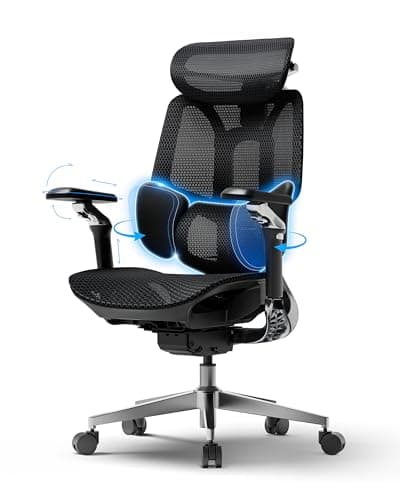
Relevant to the mechanical half of this page specifically. Most warranties lump the whole chair into one term; Hbada splits it, giving five years on the base, gas lift and casters against three years on other components - which puts the longer cover on the gas cylinder, the single most common failure point on any office chair. It also publishes a 25.6 in seat width, a three-zone dynamic lumbar with 3.15 in of backrest height adjustment, a 330 lb rating and a claimed fit range of 5 ft 1 in to 6 ft 5 in. What it does not publish is a seat height - only an overall 43.7 to 51.8 in - so if your problem turns out to be a dimension rather than a part, you cannot check it before ordering.
Who it fits
Anyone replacing a chair that failed mechanically and wanting the cylinder explicitly covered.
Who it does not fit
Anyone over 330 lb, and anyone whose problem is a seat height they need confirmed.
Published specifications
Overall height
43.7"–51.8" (seat height not published)
Seat width
25.6"
Weight capacity
330 lb
Lumbar
Three-zone dynamic lumbar, 3.15 in of backrest height adjustment
Maker's fit range
5 ft 1 in to 6 ft 5 in, per Hbada
Warranty
5-year on base, gas lift and casters; 3-year on other components
2. Best for Buying out of the problem for twelve years
Steelcase Series 1
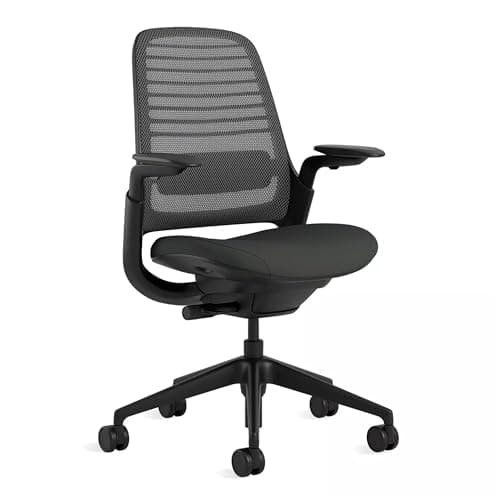
The other way to stop having this page bookmarked: a contract-grade term covering the whole chair rather than a list of parts. Steelcase publishes a 12-year multi-shift warranty on the Series 1 - multi-shift meaning the maker expects it to take more than one working day per day for twelve years - with a 400 lb rating, a seat height of 16.5 to 21.5 in and a functional seat depth of 15.5 to 17.75 in, at mid-tier money. On a page about things going wrong, warranty length and duty wording are the two most relevant published figures, and this is the longest combination available below the premium row. The adjustable lumbar is an option rather than standard.
Who it fits
Anyone who has replaced a cheap chair twice and would rather stop.
Who it does not fit
Anyone under about 5 ft 4 in, and anyone needing lumbar height adjustment as standard.
Published specifications
Seat height
16.5"–21.5"
Seat depth
15.5"–17.75"
Weight capacity
400 lb
Lumbar
Optional adjustable lumbar; weight-activated tension as standard
Included because for two of the complaints below - a seat that has gone hard, and a seat that sits slightly too low - a cushion is the correct answer and a new chair is not. ComfiLife publishes a 17.7 by 13.7 by 2.8 in memory foam cushion with a U-shaped cutout that lifts the tailbone off the pan entirely, under a stated lifetime replacement guarantee. It raises the seat by its own thickness, which fixes a chair that has run out of height and breaks a chair that was already too high. It is a seat cushion and nothing else - it does not provide lumbar support, and no amount of it will.
Who it fits
Anyone whose seat foam has compressed, or whose tailbone is the specific complaint.
Who it does not fit
Anyone whose chair is already too high, and anyone whose complaint is in the low back.
A sinking seat from a failed gas cylinder, squeaking from a dry mechanism or loose bolts, sliding forward out of the backrest, a seat that has gone hard, and an afternoon backache from a seat set too low. The first two are mechanical; the rest are adjustment.
Why does my office chair keep sinking?+
The gas cylinder has lost its seal, so gas escapes past the piston and your weight pushes the seat down. It is a sealed part - nothing you tighten changes it, and it is replaced rather than repaired. Check the warranty first; the cylinder is often named.
How do I stop my office chair squeaking?+
Turn it over and tighten every fastener, then lubricate the tilt pivot and the caster stems. If the noise survives that, it is usually coming from the gas cylinder, which is a sign the chair is nearing the end of its life.
Is my chair broken or just badly adjusted?+
If it will not hold a setting, it is broken. If it holds every setting and still feels wrong, it is adjustment - or a dimension that does not adjust. Those three buckets cover nearly everything.
When is a chair not worth fixing?+
When the fault arrives alongside others, when the chair was the wrong size for you anyway, or when it is out of warranty and cheap enough that a part plus your time costs more than it is worth. A new cylinder does not improve geometry.