The three things that matter most in a chair for back pain
1. Whether your feet reach the floor
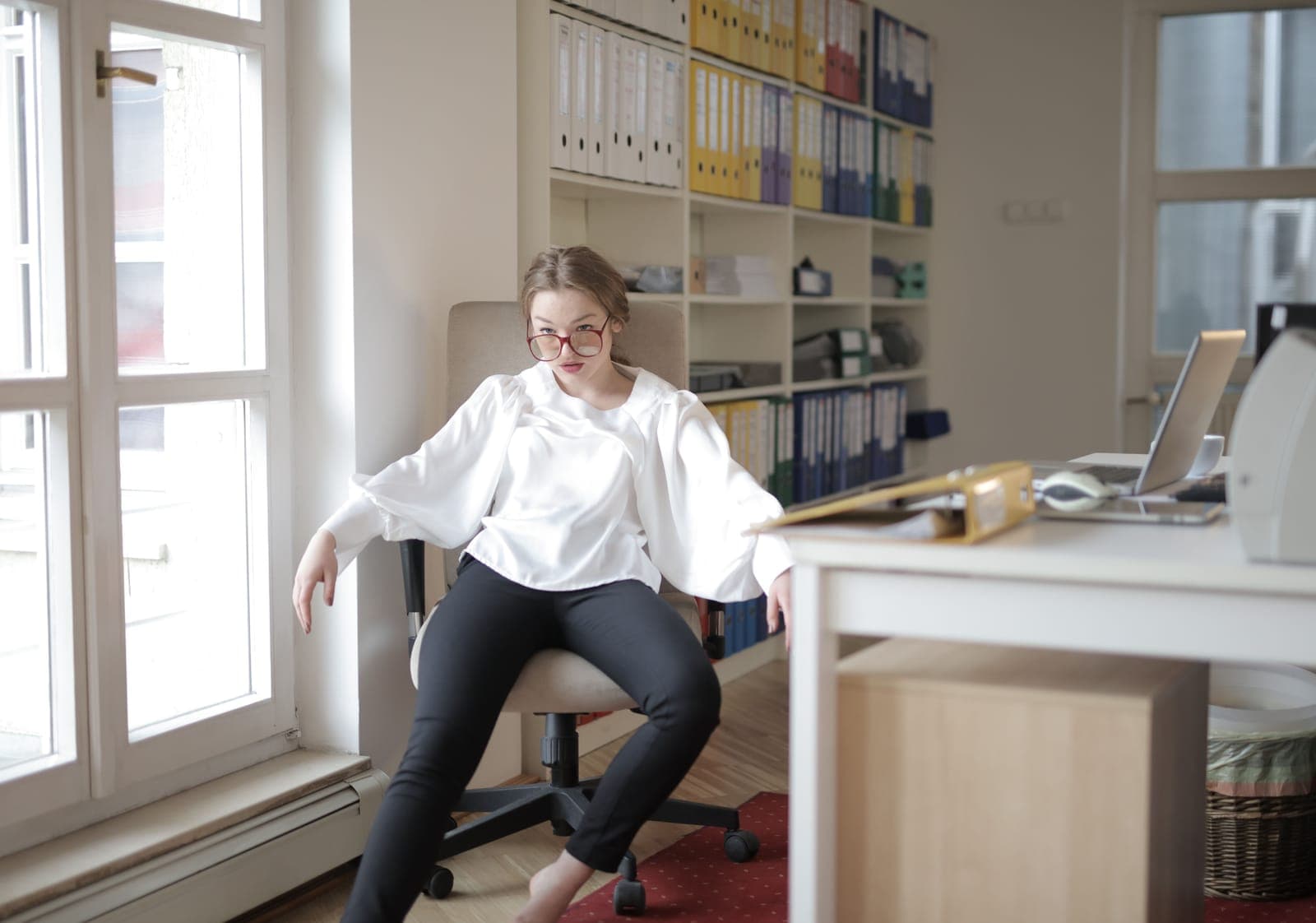
This sounds trivial and it is the most common unaddressed cause of desk back pain. With your feet unsupported, the weight of your legs hangs off the front of the seat, compressing the underside of your thighs and tipping your pelvis backward. A backward-tipped pelvis flattens the lumbar curve, and that is the mechanism behind the majority of desk-related lower back ache.
The fix is a seat that drops to roughly a quarter of your standing height, or a footrest. The industry standard minimum seat height is 17 inches, which is too high for anyone under about 5 ft 8 in - so this is not a fringe problem.
2. Whether the seat pan is shorter than your thigh
If the pan is longer, you cannot sit against the backrest and keep your knees clear at the same time. You end up either perching forward with no back support, or slumping to escape the pressure behind your knees. Both are worse than the problem you started with, and both are unconscious.
A seat depth slider fixes it. A chair without one, with a pan longer than your thigh, cannot be made to work.
3. Whether lumbar support lands where you actually curve
A molded bump in a backrest is set to a population average. If your curve sits an inch higher or lower, the bump is pushing somewhere that did not need pushing - and on a short torso it commonly lands on the mid-back instead, which creates a new ache while leaving the old one.
A height-adjustable pad solves it. So, for a fraction of the price, does a strapped cushion placed where you want it - which is why we recommend testing with one before buying a chair chosen for its lumbar system.