Picked on published fit specifications, each linked to its source. How we pick.
The short answer
Choose in this order: where the pain sits, then seat height from your own leg length, then seat depth from your thigh length, then whether the lumbar needs to move, then price. The first four are free to work out and they eliminate most of the market before you look at a single listing.
We earn a commission if you buy through our links. It does not change your price, and it does not change our ranking. Prices are pulled from Amazon's own API and stamped with the date we fetched them — where we have no live figure, the button opens the current price on the retailer's page instead. Full disclosure.
Ranked picks with published seat height, seat depth and weight capacity
#
Product
Best for
Seat height
Capacity
Price
1
Steelcase Leap v2
Height-adjustable lumbar plus a separate firmness dial
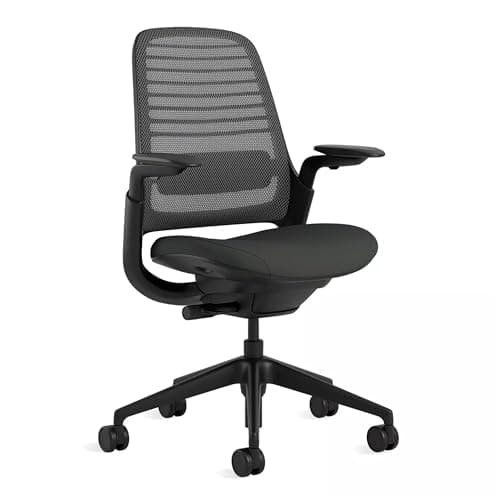
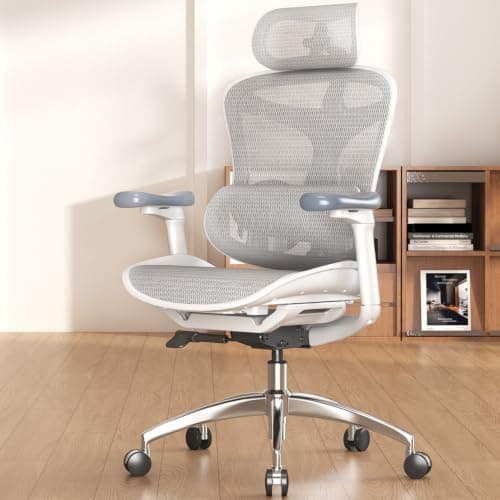
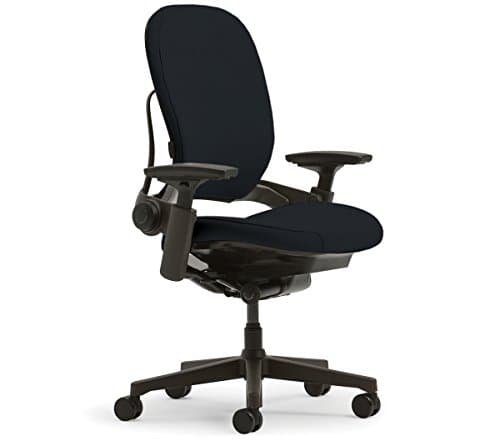
#ad Seat height and capacity are the manufacturer's published figures, sourced under each pick. Prices come live from Amazon's own API and carry the date we fetched them; where a figure is missing the button opens the current price instead. Seat depth for every pick is in the spec block below. Seat depth summary: Steelcase Leap v2 15.75" · Steelcase Series 1 15.5"–17.75" · Sihoo Doro C300 18.11"
Decide in this order and most of the market disappears
The reason chair roundups contradict each other is that they all answer the last question first. Price, brand and star rating are the fifth decision, not the first. Work the five in order and by the time you reach price you will be choosing between three or four chairs rather than three or four hundred.
One: where does it hurt, and what makes it worse?
This is the question that sets everything after it, and it takes thirty seconds. Pain across the low back that builds through the day and eases when you stand is the pattern a chair most reliably helps. Pain that runs down one leg is a nerve pattern and points at the sciatica page. Pain right at the tailbone when you sit on a hard surface points at coccyx pain, which is a seat problem rather than a back problem. Pain between the shoulder blades is usually a monitor height problem wearing a chair costume - the upper back page covers that.
Also note what makes it worse. The Merck Manual records that lumbar spinal stenosis symptoms are typically relieved by flexing the back or sitting and worsened by standing or walking, while the same reference notes that pain worsening with flexion is consistent with disc disease. Those two patterns want opposite things from a backrest, which is exactly why a single universal recommendation does not exist.
Two: seat height, from your leg and not from your height chart
A seat that is too high leaves your feet dangling and loads the backs of your thighs. A seat too low closes the hip angle and tips the pelvis backward, which flattens the lumbar curve and is the single most common mechanical cause of desk-related back ache. Our seat height lookup table turns your standing height into a target seat height range using published anthropometric figures from the BIFMA-derived Allsteel reference guide, with the arithmetic shown so you can check it.
Then check the listing. The trap here is that several brands publish overall chair height rather than seat height, and the two cannot be converted into each other. If the listing does not say seat height, you cannot complete this decision before the box arrives.
Three: seat depth, from your thigh
With your back against the backrest, there should be roughly two to three fingers of gap between the front edge of the seat and the back of your knee. Too much pan and the edge presses into the calf, cutting circulation and dragging you forward out of the lumbar support; too little and your thighs are unsupported. The seat depth guide has the thigh-length math, and the chairs that actually adjust seat depth is the short list if your measurement falls outside the usual range.
Published seat depth across our registry
Chair
Published seat depth
Adjustable?
Steelcase Series 1
15.5-17.75 in functional
Yes, sliding pan
Herman Miller Embody
15-18 in
Yes
Herman Miller Aeron
16 in (A), 17 in (B), 18.5 in (C)
By shell size, not by slider
HON Ignition 2.0 Big and Tall
17.75-19.5 in usable
Yes
HAG Capisco 8106
13.4-16.5 in
Yes
Sihoo Doro C300 / M57
18.11 in
No
Steelcase Leap v2
15.75 in
No
Hbada E3 Pro
Not published (1.97 in of slide travel is published)
Slide travel only
Four: does the lumbar need to move?
If decision one gave you a location you can point to, yes. A fixed lumbar contour supports the average spine at the average height, and if your pain sits above or below that, a fixed pad presses in the wrong place for eight hours a day. If your ache is diffuse and sits across the low back, a fixed contour is usually fine and you can spend the money elsewhere. Adjustable versus fixed lumbar is the full argument, and how lumbar support should feel tells you whether what you already own is wrong or just unfamiliar.
Five: now look at the price
Only now. What each band buys is reasonably predictable: what you get at each price tier sets it out, and the short version is that the budget band buys you a back and a seat, the mid band buys you adjustment, and the premium band buys you adjustment plus a warranty with duty wording. If your answers to decisions three and four were both "no adjustment needed", the budget band is genuinely sufficient and the budget roundup is where to go. If either was yes, the budget band will frustrate you.
Two cheaper routes worth knowing before you spend. A sub-200 chair chosen on the right specs beats a premium chair chosen on the wrong ones. And if the chair you own already has the right geometry, adjusting it properly costs nothing and is the step most readers skip.
What not to choose on
Star ratings aggregate people with different bodies and different problems, so a five-star average tells you that the chair suits the average buyer, which is not information about you. "Ergonomic" is not a regulated term and appears on chairs with no adjustment at all - how to tell if a chair is actually ergonomic gives the checklist. Mesh versus foam is a comfort and temperature preference, not a back pain decision; the mesh versus foam comparison lays out what each actually changes. And a headrest does nothing for lumbar pain at all.
The whole thing on one line
Work out where it hurts, measure your leg and your thigh, decide whether the lumbar needs to move, and only then open a shopping tab. Four free decisions, then one paid one. If you want the general version of this without the back pain, the office chair buying guide covers the same ground for readers who are simply replacing a chair.
The picks in full
1. Best for Located pain you can point to
Steelcase Leap v2
The chair that comes out of decision four when the answer is yes, the lumbar needs to move. Steelcase publishes a height-adjustable lumbar with a separate lower-back firmness dial - two controls where most chairs give you none - so you can put the support at the level that hurts and at a pressure you can tolerate for a day. Published seat height 16 to 20.5 in, a fixed 15.75 in pan, 25 in back height, arms 7 to 11 in above the seat, 400 lb, 12-year multi-shift. The fixed pan is the reason it loses decision three for a long-thighed reader.
Who it fits
Anyone whose pain has a specific height on the spine.
Who it does not fit
Long-thighed sitters; the pan does not slide. Anyone outside the premium band.
Published specifications
Seat height
16"–20.5"
Seat depth
15.75"
Seat width
19.25"
Back height
25"
Arm height
7"–11"
Weight capacity
400 lb
Lumbar
Height-adjustable lumbar plus a lower-back firmness dial
The chair that comes out of decision three when the answer is a long thigh. Steelcase publishes a functional seat depth of 15.5 to 17.75 in and a seat height of 16.5 to 21.5 in, so the pan length and the seat height can both be matched to your measurements rather than to the average. Rated to 400 lb with the same 12-year multi-shift warranty as the Leap, at mid-tier money. The one thing to confirm at the point of order: adjustable lumbar is an option on this chair, not standard, so a reader coming out of decision four wanting a movable pad needs to specify it.
Who it fits
Taller sitters, long-thighed sitters, and anyone whose ache is diffuse rather than located.
Who it does not fit
Anyone under about 5 ft 4 in. Anyone who needs lumbar height adjustment as standard.
Published specifications
Seat height
16.5"–21.5"
Seat depth
15.5"–17.75"
Weight capacity
400 lb
Lumbar
Optional adjustable lumbar; weight-activated tension as standard
The chair that comes out of decision five when the budget is tight and decision three said the pan was too short. Sihoo publishes an 18.11 in seat depth and a 20.28 in seat width with a self-adapting dynamic lumbar, a 330 lb capacity and a three-year warranty. The deliberate limit: Sihoo publishes an overall height of 42 to 49 in and no seat height at all, so you cannot complete decision two before it arrives - you are buying on the pan and the back, and checking the height afterwards.
Who it fits
Readers whose main complaint is pressure at the front edge of the seat, on a budget.
Who it does not fit
Anyone who needs the seat height confirmed before ordering, or a movable lumbar pad.
Before you work through any of the five decisions, rule out the things a chair has no bearing on. See a clinician first if you have:
Pain that runs below the knee, or numbness and tingling in the foot
Weakness in a leg or foot, or a foot that catches when you walk
Pain that wakes you at night, or that is worse lying down than sitting
Sudden onset after a fall, a lift, or an impact
Any change in bladder or bowel control, or numbness around the groin - this one is urgent
Pain with unexplained weight loss, fever, or a history of cancer
The NIH notes that most people with ordinary back pain find relief within about six weeks, and that a desk job may play a role, especially with poor posture or a full day in an uncomfortable chair. That is the case where this page applies. Radiating, waking or post-injury pain is a different question and not one a purchase answers.
We are not doctors, physical therapists or certified ergonomists, and nothing here is medical advice. If you are in real pain, see someone who is qualified to look at it.
Questions people actually ask
How do I choose an office chair for back pain?+
In five decisions, in this order: where the pain sits and what makes it worse; seat height from your lower leg length; seat depth from your thigh length; whether the lumbar support needs to be movable; and only then price. The first four cost nothing and eliminate most of the market.
What is the most important feature in a chair for back pain?+
Seat height, because getting it wrong tips the pelvis backward and flattens the lumbar curve no matter how good the backrest is. Lumbar adjustment matters second, and only if your pain has a specific location.
Do I need an expensive chair for back pain?+
Only if your answers require adjustment the budget band does not offer - a sliding pan, a lumbar pad you can move, a long warranty with duty wording. A sub-200 chair chosen on the right specs beats a premium chair chosen on the wrong ones.
Does a mesh back help with back pain?+
Not directly. Mesh changes how the chair breathes and how the load spreads across the back; it does not change where the lumbar support sits or how high the seat is. Treat it as a comfort preference, not a pain decision.
How long before a new chair helps?+
Give it a couple of weeks of deliberate adjustment rather than judging it on day one - a chair set up wrong feels worse than the one it replaced. See how long to get used to a new chair.