Picked on published fit specifications, each linked to its source. How we pick.
The short answer
Four of your measurements decide it: lower leg length sets seat height, thigh length sets seat depth, seated hip width sets seat width, and your torso sets back height. Take all four once, write them down, and every listing becomes a yes or a no instead of a guess.
We earn a commission if you buy through our links. It does not change your price, and it does not change our ranking. Prices are pulled from Amazon's own API and stamped with the date we fetched them — where we have no live figure, the button opens the current price on the retailer's page instead. Full disclosure.
Ranked picks with published seat height, seat depth and weight capacity
#
Product
Best for
Seat height
Capacity
Price
1
Herman Miller Aeron
Three shells: A, B and C, each with its own published numbers
#ad Seat height and capacity are the manufacturer's published figures, sourced under each pick. Prices come live from Amazon's own API and carry the date we fetched them; where a figure is missing the button opens the current price instead. Seat depth for every pick is in the spec block below. Seat depth summary: Herman Miller Aeron 16"–18.5" · Steelcase Series 1 15.5"–17.75" · Hbada E3 Pro —
Chairs do not come in sizes, so you have to supply them
Shoes come in sizes. Clothes come in sizes. Office chairs come in one size and a photograph, with the exception of the Aeron and a handful of contract chairs sold in shells. Everything else is described by adjustment ranges that you are expected to compare against measurements nobody ever told you to take.
There are four of those measurements. Take them once, write them on the back of an envelope, and every chair listing you look at from then on resolves to a yes or a no. How to measure yourself for an office chair is the step-by-step version with a tape measure; this page is the decision table you use afterwards.
The four measurements, and what each one sets
Your measurement, the chair spec it decides, and how to check a listing
Measure this
It sets
What to look for in the listing
Floor to the back of your knee, shoes on, sitting upright
Seat height
A published seat height RANGE that brackets your number - not overall chair height
Back of your hip to the back of your knee, sitting
Seat depth (pan length)
A published seat depth about 1 to 2 in shorter than your measurement
Across the widest part of your hips, sitting
Seat width
A published seat width at least 2 in wider than your measurement
Seat to the top of your shoulder blades, sitting
Backrest height
A published back height that reaches at least to the shoulder blades
Three of the four are seated measurements, and that is deliberate - soft tissue spreads under load, so a standing hip measurement will under-read your real sitting width by an inch or more. Use a hard flat surface, sit upright, and measure with the tape against the seat rather than against your clothes.
Seat height: the one that goes wrong most often
If the seat is too high your feet dangle and the front edge loads the back of your thighs. If it is too low your knees rise above your hips, the pelvis rolls backward and the lumbar curve flattens, which is the most common mechanical cause of desk-related back ache. The seat height lookup table converts your standing height into a target range using the published figures in the Allsteel BIFMA reference guide, with the arithmetic shown so you can check the working rather than trust it.
Seat depth: measure the thigh, not the chair
With your back against the backrest you want roughly two to three fingers between the front edge of the seat and the back of your knee. More than that and your thighs are unsupported; less and the edge presses into the calf, which drags you forward out of the lumbar support. The seat depth guide has the thigh-length math, and published pans in our registry run from 13.4 in on the Capisco to 21.5 in on the ErgoChair Pro - a spread of eight inches on a figure most listings bury.
If your measurement falls outside the common 16 to 18 in band in either direction, you want a chair with a sliding pan rather than a fixed one. Chairs with adjustable seat depth is that shortlist.
Seat width and back height: the two nobody checks
Seat width decides whether the raised pan edges press into the outside of your hips, which is a specific and avoidable kind of pain - why an office chair hurts your hips works through it, and the seat width guide lists the published widths. Back height decides whether the backrest ends above or below your shoulder blades. A back that stops below them leaves the upper back unsupported and tends to produce exactly the between-the-shoulder-blades ache people blame on their monitor.
Four common bodies, and the size that follows
Worked examples, using published figures from our registry
If you are
The binding constraint is
What to shop for
Around 5 ft 0 in to 5 ft 3 in
Seat height floor - most chairs will not go low enough
A published minimum seat height at or below 16.5 in; Aeron size A at 14.4 in, Leap v2 at 16 in
Around 5 ft 4 in to 6 ft 0 in
Usually nothing - you are inside the design range
Pick on seat depth and lumbar type instead; almost any adjustable chair fits
6 ft 2 in and above
Seat depth and back height, not seat height
A pan of 18 in or more and a back of 25 in or more; see the 6 ft 4 in page
Broad through the hips at any height
Seat width, and sometimes capacity
A published seat width 2 in clear of your sitting width; Hbada E3 Pro 25.6 in, Branch 25 in, HON Ignition BT 23.5 in
If you are at the short end, the short person roundup is the shortlist; at the tall end, the 6 ft 4 in page goes through the numbers in detail. Being inside the design range is not boring news - it means you get to choose on the things that actually differ, which the buying guide covers.
What to do when the listing does not say
Three options, in order of preference. Find the spec sheet on the maker's own site rather than the retail listing, because the figures are usually published and simply not repeated. Failing that, buy from a seller with a returns policy and measure the chair when it arrives - a tape measure and five minutes settles it. Failing both, treat the absence as information: a maker who does not publish a seat height on a chair sold for ergonomics has told you something about the chair.
The picks in full
1. Best for The only chair genuinely sold in sizes
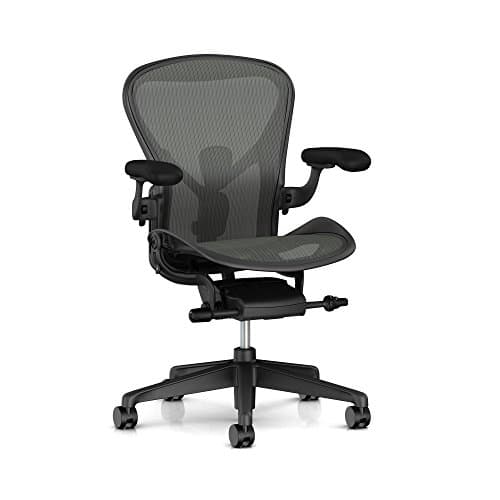
Herman Miller Aeron
The reason this chair keeps appearing on fit pages is that it is the only mainstream office chair where size is a purchase decision rather than an afterthought. Herman Miller publishes size A at a seat height of 14.4 to 19.3 in with a 16 in pan and a 300 lb rating, size B at 14.8 to 22.8 in with a 17 in pan and 350 lb, and size C at 15.8 to 22.8 in with an 18.5 in pan and 400 lb. That spread covers the 5th to 95th percentile properly instead of averaging it. Lumbar is PostureFit SL or an adjustable pad, both height-adjustable; the warranty is 12-year, 3-shift. The risk is buying the wrong shell, which is a far worse outcome than buying a cheaper chair in the right dimensions.
Who it fits
Anyone at either end of the height range who wants the chair matched to their measurements.
Who it does not fit
Anyone buying secondhand who cannot confirm the shell. Anyone outside the premium band.
Published specifications
Seat height
14.4"–22.8"
Seat depth
16"–18.5"
Weight capacity
400 lb
Lumbar
PostureFit SL or adjustable lumbar pad, both height-adjustable
Sizes
A (seat height 14.4-19.3 in, seat depth 16 in, warrantied to 300 lb), B (14.8-22.8 in, 17 in, 350 lb), C (15.8-22.8 in, 18.5 in, 400 lb)
2. Best for The widest adjustment range in one shell
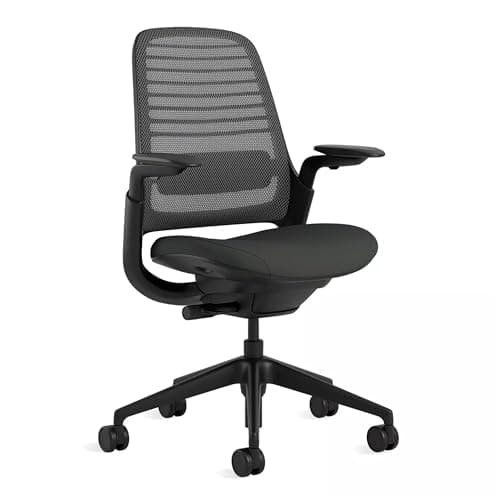
Steelcase Series 1
If you are not going to buy a sized chair, buy the one with the most range in a single shell. Steelcase publishes a seat height of 16.5 to 21.5 in and a functional seat depth of 15.5 to 17.75 in, which means two of the four measurements on this page are adjustable rather than fixed - uncommon at mid-tier money and the main reason this chair fits a wider span of bodies than its price suggests. Rated to 400 lb with a 12-year multi-shift warranty and weight-activated tension as standard. The two gaps: the pan floor of 16.5 in is still too high for a short sitter, and the adjustable lumbar is an option rather than standard.
Who it fits
Anyone between about 5 ft 4 in and 6 ft 3 in who wants seat height and pan length both adjustable.
Who it does not fit
Anyone under about 5 ft 4 in. Anyone who needs lumbar height adjustment included as standard.
Published specifications
Seat height
16.5"–21.5"
Seat depth
15.5"–17.75"
Weight capacity
400 lb
Lumbar
Optional adjustable lumbar; weight-activated tension as standard
3. Best for A published fit range you can check against your height
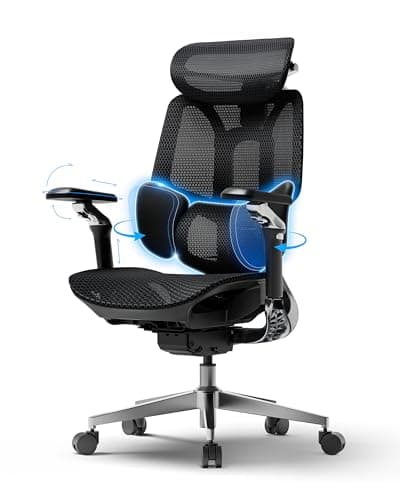
Hbada E3 Pro
Included because it does the one thing almost nobody else in the budget band does: Hbada publishes a recommended fit range, 5 ft 1 in to 6 ft 5 in, so there is at least a stated claim to hold the chair to. It also publishes a 25.6 in seat width - the widest figure in our registry, which matters for the third measurement on this page - with a three-zone dynamic lumbar carrying 3.15 in of backrest height adjustment and a 330 lb rating. What it does not publish is a seat height or a pan length, only an overall height of 43.7 to 51.8 in and 1.97 in of slide travel, which means two of the four measurements here cannot be checked before it arrives.
Who it fits
Broader sitters on a budget who want a stated fit range rather than silence.
Who it does not fit
Anyone over 330 lb, and anyone who wants seat height confirmed before ordering.
Published specifications
Overall height
43.7"–51.8" (seat height not published)
Seat width
25.6"
Weight capacity
330 lb
Lumbar
Three-zone dynamic lumbar, 3.15 in of backrest height adjustment
Maker's fit range
5 ft 1 in to 6 ft 5 in, per Hbada
Warranty
5-year on base, gas lift and casters; 3-year on other components
Work it out from four of your own measurements: floor to the back of your knee sets seat height, hip to the back of your knee sets seat depth, your seated hip width sets seat width, and seat to shoulder blades sets back height. Then check each against the chair's published figures.
Are office chairs one size fits all?+
Almost all of them are sold that way, and they are not. The Herman Miller Aeron is the main mainstream exception, sold in three shells - A, B and C - each with its own published seat height, pan length and weight rating.
How do I know if a chair seat is too deep for me?+
Sit all the way back against the backrest. If you cannot fit two to three fingers between the front edge of the seat and the back of your knee, the pan is too long and it will press into your calf and pull you forward out of the lumbar support.
What if the listing only gives overall height?+
Then it has not answered the seat height question, and the two figures are not convertible. Look for the maker's own spec sheet, or buy somewhere with a returns policy and measure it yourself when it arrives.
How wide should an office chair seat be?+
At least two inches wider than the widest part of your hips measured while seated. Below that, the raised edges of a contoured pan press into the outside of the hips, which is a distinct kind of discomfort from ordinary seat firmness.