Half the market says mesh is the serious choice and the other half says it is uncomfortable, and the listings do not tell you which kind of mesh you are being sold.
Picked on published fit specifications, not on hands-on testing. How we pick.
The short answer
Mesh wins on heat and on pressure over a long day. Foam wins on cushioning and edge comfort. The complication is that most chairs sold as mesh are actually a foam seat with a breathable cover, which is a third category and gets you almost none of the mesh benefit.
We earn a commission if you buy through our links. It does not change your price, and it does not change our ranking. We do not publish prices, because we do not run a live price feed — every button opens the current price on the retailer's own page. Full disclosure.
Ranked picks with published seat height, seat depth and weight capacity
#ad Seat height and capacity are the manufacturer's published figures, sourced under each pick. We do not publish prices — each button opens the current price on the retailer's own page. Seat depth for every pick is in the spec block below. Seat depth summary: Herman Miller Aeron 16"–18.5" · Steelcase Leap v2 15.75" · Sihoo Doro C300 18.11"
There are three categories, not two
The three things sold under two words
Tensioned suspension mesh
Mesh over a frame
Foam with a fabric cover
What it is
Fabric stretched taut, nothing behind it
Mesh fabric on a shaped frame, minimal padding
A foam pad with a breathable cover
Pressure
Deflects continuously
Some give, frame underneath
Compresses to a fixed shape
Airflow
Genuine, through the seat
Good
Marginal
Feel
Firm, no cushioning
Firm
Cushioned
Front edge
Gives, if well engineered
Can be hard - the frame is close
Contoured waterfall edge, usually forgiving
Typical price
Premium
Budget to mid
Any
Example here
Herman Miller Aeron
Sihoo Doro C300
Steelcase Leap v2
Most of the internet argument about mesh versus foam is actually about the middle column against the right one, and the genuinely distinctive left-hand option barely enters it.
Where mesh wins
Heat. Unambiguous, predictable, and the clearest reason to buy mesh. If you finish the day with a damp shirt back, this is your answer.
Pressure across a long day. Foam compresses to its final shape and then presents a fixed surface. A tensioned seat keeps deflecting. The gap widens the longer you sit, which is why mesh features heavily on our long hours page.
Not holding a shape. Foam that has been compressed by one person for two years has learned that person's shape. Tensioned fabric does not.
Where foam wins
Cushioning. Obvious, and a real preference rather than a mistake. Some people will never be comfortable on unpadded mesh.
Edge comfort. A contoured waterfall front edge on a foam pan is forgiving. A cheap mesh seat with the frame close under the fabric is not - this is the single commonest complaint about budget mesh chairs.
Tailbone sensitivity, sometimes. It splits both ways: some people find mesh spreads pressure and helps, others find a firm tensioned surface concentrates load through the bony points. See the coccyx page.
Cold rooms. Breathability works in both directions.
No stretch failure mode. Tensioned fabric can slacken over years. Upholstery flattens, which is less dramatic.
Neither is better for your back
The claim most worth pushing back on. Your back is supported by the backrest shape and the lumbar support, not by the material. A mesh chair with a fixed molded lumbar curve at the wrong height for you is worse for your back than an upholstered chair with an adjustable pad.
Where the material contributes is indirect: a suspension back conforms rather than presenting a fixed contour, so a poorly matched shape is less punishing. Real, and well behind adjustability in importance. See best lumbar support office chairs.
How to tell what a listing is actually selling
Find a photograph of the seat from underneath. A suspension seat shows fabric stretched across a frame. A foam seat shows a molded pad. This is the reliable test.
Look for the words "suspension" or "tensioned". Brands that have it advertise it, because it costs more to engineer.
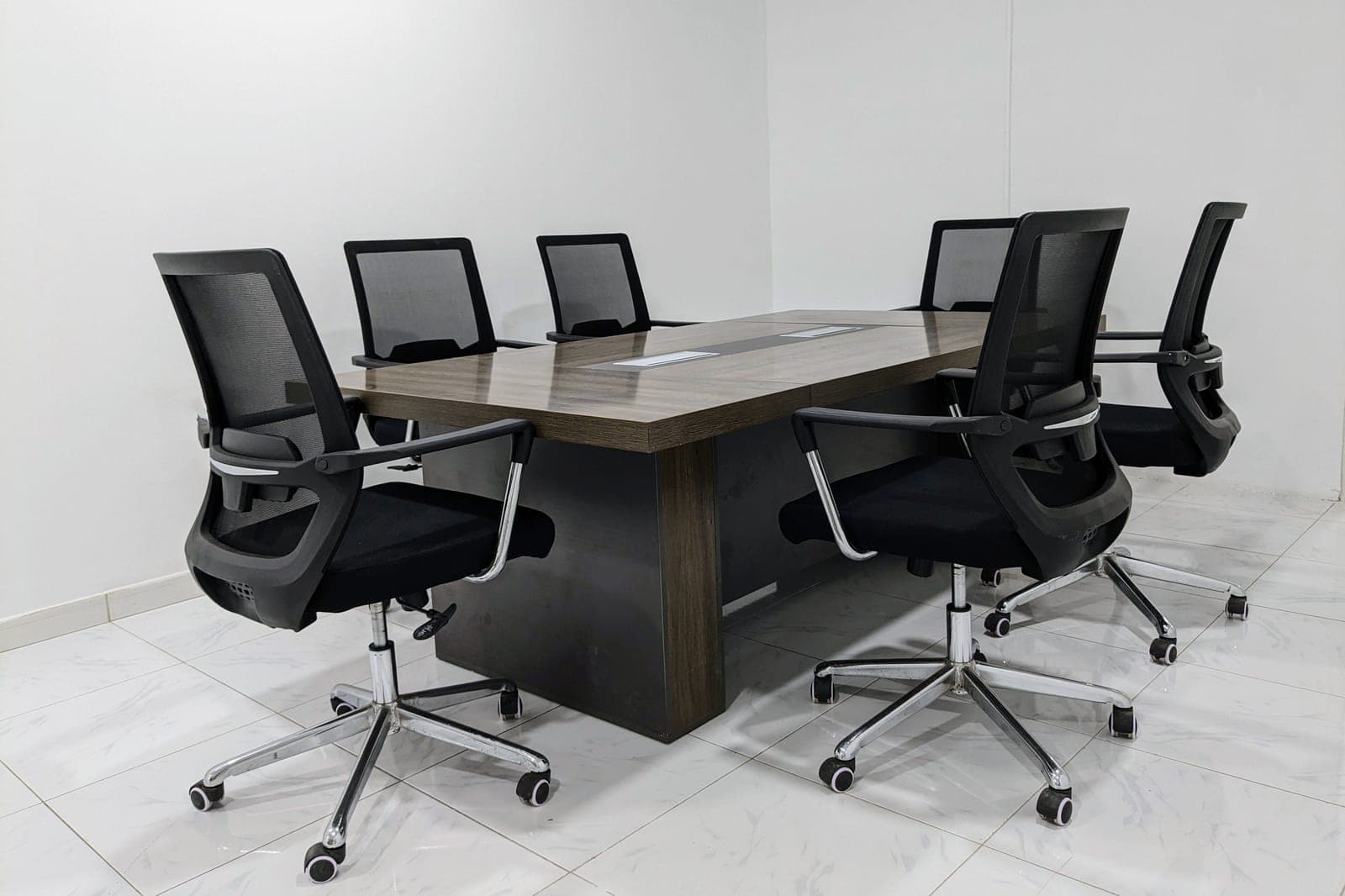
Note whether seat and back are described separately. "Mesh back" almost always means a foam seat.
Price is a signal. Real tensioned suspension is a structural engineering problem. An inexpensive chair with a genuine suspension seat is unusual.
Which to buy
A decision table
Your situation
Buy
You finish the day hot
Mesh - and check it is a real mesh seat, not a mesh back
You sit 6+ hours a day
Mesh, for the pressure behavior
You like a cushioned seat and know you do
Foam
You have an acutely sore tailbone
Try before buying - it splits both ways
Your room is cold
Foam
Your budget is under $200
Whichever fits your legs. Material is a third-order decision at this price
If you want the actual mesh benefit rather than the mesh aesthetic, this is the reference implementation. Both the seat and the back are tensioned fabric stretched across a frame, so the seat keeps deflecting under you rather than compressing to a fixed shape, and air passes through rather than building up. Three shell sizes let you get the pan length right on top of that. Herman Miller warranties it twelve years on a three-shift basis, which matters because a tensioned seat can stretch over years in a way upholstery cannot.
Who it fits
Anyone who overheats, and anyone whose seat feels harder at hour seven than at hour one.
Who it does not fit
Anyone who wants cushioning. There is none, and no adaptation period changes that.
Published specifications
Seat height
14.4"–22.8"
Seat depth
16"–18.5"
Weight capacity
400 lb
Lumbar
PostureFit SL or adjustable lumbar pad, both height-adjustable
Sizes
A (seat height 14.4-19.3 in, seat depth 16 in, warrantied to 300 lb), B (14.8-22.8 in, 17 in, 350 lb), C (15.8-22.8 in, 18.5 in, 400 lb)
The case for foam is that it cushions, holds a contoured shape and has a forgiving front edge - and that if you do not overheat, the mesh advantage is solving a problem you do not have. The Leap v2 is the best-executed upholstered chair in our registry: a sliding lumbar pad with a firmness dial, five lockable tilt positions, published armrest ranges and a 400-pound rating, all on a foam pan with a sliding depth adjustment.
Who it fits
Anyone who prefers cushioning and works in a normally cool room.
Who it does not fit
Anyone who finishes the day warm - upholstery holds heat and nothing about the adjustment fixes that.
Published specifications
Seat height
16"–20.5"
Seat depth
15.75"
Seat width
19.25"
Back height
25"
Arm height
7"–11"
Weight capacity
400 lb
Lumbar
Height-adjustable lumbar plus a lower-back firmness dial
The useful middle case. Sihoo publishes mesh on both the back and the seat, which is genuinely less common in the budget tier than the listings imply - most budget mesh chairs are mesh-backed with a foam seat. So you get real airflow and a firm surface at a budget price. What you do not get is the tensioned suspension engineering of an Aeron, and being clear about that difference is the entire point of this page.
Who it fits
Anyone who wants the breathability without premium spend, and who understands what they are not buying.
Who it does not fit
Anyone expecting Aeron-grade pressure behavior, and anyone who needs a published seat height.
Mesh for heat and for pressure over a long day; foam for cushioning and edge comfort. Neither is better for your back - that is decided by the backrest shape and the lumbar support.
Do mesh chairs last as long as foam ones?+
Tensioned fabric can slacken over years, which is a failure mode upholstery does not have. The warranties are the makers' own answer: Herman Miller covers the Aeron twelve years on a three-shift basis.
Is a mesh seat uncomfortable?+
It is firm and unpadded, and a real minority of people never get on with it. A poorly engineered mesh seat with the frame close under the fabric at the front edge is worse than a good foam pan, which is where cheap mesh chairs fall down.
Is a mesh back with a foam seat a good compromise?+
Yes. Most heat builds against your back, so you capture a good share of the benefit for much less. Just do not pay a premium for mesh you are not getting on the seat.