Picked on published fit specifications, not on hands-on testing. How we pick.
The short answer
Firm is usually correct - soft foam compresses under your sit bones until you are resting on the board beneath it. The real question is whether pressure is concentrated at one point or spread. A cutout cushion fixes concentrated pressure; more padding almost never does.
We earn a commission if you buy through our links. It does not change your price, and it does not change our ranking. Prices are pulled from Amazon's own API and stamped with the date we fetched them — where we have no live figure, the button opens the current price on the retailer's page instead. Full disclosure.
Ranked picks with published seat height, seat depth and weight capacity
#ad Seat height and capacity are the manufacturer's published figures, sourced under each pick. Prices come live from Amazon's own API and carry the date we fetched them; where a figure is missing the button opens the current price instead. Seat depth for every pick is in the spec block below. Seat depth summary: ComfiLife Premium Comfort Seat Cushion — · Herman Miller Embody 15"–18" · Steelcase Series 1 15.5"–17.75"
Firm is usually the right answer
This is worth establishing before you spend anything, because the instinct is to add padding and the instinct is usually wrong. Soft foam compresses under the two bony points you sit on - the ischial tuberosities, or sit bones - until the foam under them has bottomed out and you are effectively resting on the board beneath. The first ten minutes feel generous and hour four does not.
A firm pan distributes load across more of your contact area rather than letting it collapse at the two hardest points. That is why contract-grade chairs tend to feel firmer than consumer chairs, and why a cheap deeply padded chair feels better in a shop and worse at a desk. Showroom comfort selects for exactly the wrong property - why office chairs are so uncomfortable goes into that trap in full.
The one test that tells you which problem you have
Three different complaints that all get described as a hard seat
Where you feel it
What it actually is
What fixes it
One point - tailbone or a single sit bone
Concentrated contact pressure
A cutout cushion that removes contact there, not a thicker pad
The whole seat, evenly, after a few hours
Pressure distribution across the pan
A pan built to spread load, or a seat cushion with real depth
A ridge under the thighs, nearer the knees
Seat depth too long for your thighs
Shorten the pan; nothing you put on top of it helps
Numbness or pins and needles in the buttocks or legs
Free: change your seat height and seat depth first. Pressure under the sit bones goes up when your feet are unsupported, because your legs stop carrying any of your weight and it all transfers to the pan. Getting your feet flat on the floor or a footrest reduces seat pressure without buying anything - is your chair too high or too low gets the height right, and do you need a footrest covers the case where the chair cannot come down far enough.
Cheap: a cushion, chosen for geometry rather than thickness. A cutout cushion addresses concentrated pressure; a flat thick cushion mostly raises you. Whichever you use, note the knock-on effect: a 2.8 inch cushion raises your seat height by nearly three inches, which changes your elbow height relative to the desk and moves your lumbar curve up relative to any back support. Reposition that the same day - where to place a lumbar support pillow explains why.
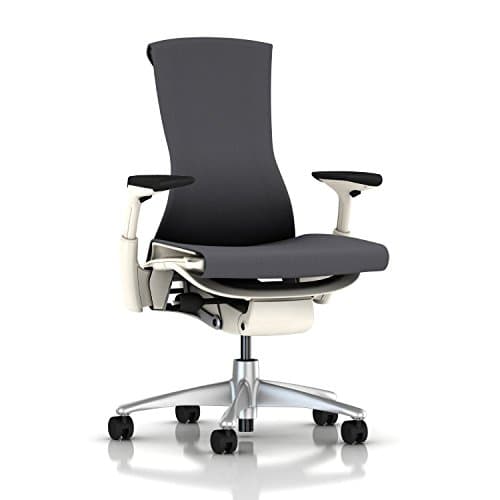
Expensive: a chair whose pan is built for distribution. Worth it if the discomfort is diffuse and the free and cheap options have not moved it. This is a real design axis rather than a marketing one - the Embody's seat is built as a distributing layer rather than a block of foam - but it is the last step, not the first.
Mesh seats, and why they are a separate conversation
A mesh seat pan is not simply a firmer foam seat. It supports you in tension rather than compression, which spreads load well across the middle of the pan, and it concentrates pressure at the frame edge where the mesh is anchored. The practical result is that mesh seats tend to suit people who found foam collapsed under their sit bones, and to bother people who are sensitive to the front edge.
It also changes what a cushion does: putting a thick cushion on a mesh pan defeats the tension mechanism entirely and you are now sitting on a cushion suspended over a hole. Mesh versus foam has the full trade-offs, and are mesh office chairs good addresses the broader question.
If it is a brand-new chair
Foam does soften slightly over the first days and weeks, and that is the one break-in effect that is real. It is also small. If the seat is uncomfortable on day one, expect it to be marginally better on day ten and not transformed - and decide inside your return window rather than after it. How long to get used to a new office chair has what changes and what does not, and the short version is: foam yes, geometry never.
The picks in full
1. Best for Taking pressure off one specific point
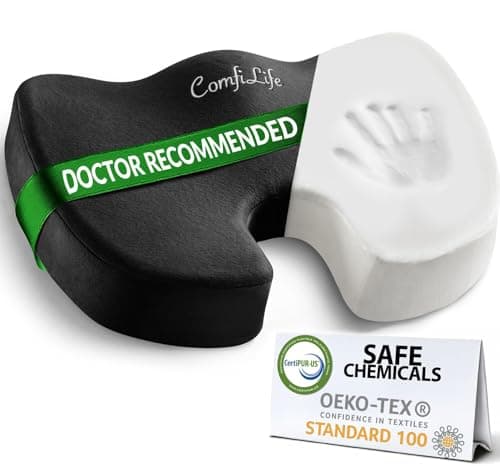
ComfiLife Premium Comfort Seat Cushion
The right answer for the most common version of this complaint, which is not a hard seat in general but a sore tailbone in particular. ComfiLife publishes a 17.7 by 13.7 by 2.8 in memory foam cushion with a U-shaped coccyx cutout and a stated lifetime replacement guarantee. The mechanism is geometric rather than soft: the cutout removes contact under the tailbone entirely instead of padding it, which is why it works where a thicker cushion does not. Two things to know before buying. It raises your seat height by nearly 3 in, so check your desk clearance first. And it provides no back support at all - this is a seat cushion only.
Who it fits
Anyone with a sore tailbone or a single hot spot rather than a generally uncomfortable seat.
Who it does not fit
Anyone whose desk is already too high, and anyone whose discomfort is spread across the whole pan.
2. Best for A seat designed to spread load rather than cushion it
Herman Miller Embody
The different idea on this page: instead of foam thickness, a pixelated support layer built to distribute pressure across the whole contact area. Herman Miller publishes a 16 to 20.5 in seat height, an adjustable seat depth of 15 to 18 in, a 21.25 in seat width, a 300 lb rating and a 12-year warranty, with backfit curvature across the whole back rather than a lumbar pad. Worth the mention because this complaint is about pressure distribution and this is the chair in our registry designed around that specific problem. The honest caveats: a 300 lb rating - the lowest premium figure here - and one shell size only.
Who it fits
Anyone whose discomfort is diffuse pressure across the whole seat rather than one sore point.
Who it does not fit
Anyone over 300 lb, and anyone at the extremes of height - there is one size.
Published specifications
Seat height
16"–20.5"
Seat depth
15"–18"
Seat width
21.25"
Weight capacity
300 lb
Lumbar
Backfit adjustment across the whole spine rather than a lumbar pad
3. Best for Fixing it with depth instead of padding
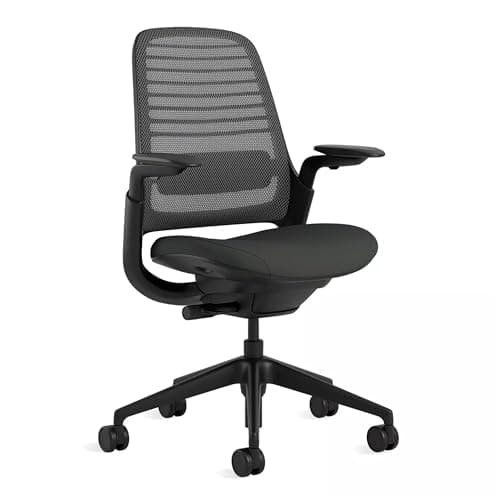
Steelcase Series 1
Included because a meaningful share of too-hard complaints are really too-deep complaints. If the pan is longer than your thighs, the front edge takes load it should not, and the sensation is a hard ridge under the backs of your legs - which reads as a hard seat and is actually a geometry problem. Steelcase publishes a functional seat depth of 15.5 to 17.75 in on the Series 1, plus a 16.5 to 21.5 in seat height, a 400 lb rating and a 12-year multi-shift warranty at mid-tier money. Shortening the pan moves the load back onto the part of the seat meant to carry it, and no cushion achieves that.
Who it fits
Anyone whose hardness is felt as a ridge under the thighs rather than under the sit bones.
Who it does not fit
Anyone under about 5 ft 4 in, and anyone wanting lumbar height adjustment as standard.
Published specifications
Seat height
16.5"–21.5"
Seat depth
15.5"–17.75"
Weight capacity
400 lb
Lumbar
Optional adjustable lumbar; weight-activated tension as standard
A cushion changes contact pressure. It does not treat a nerve or a joint, and some symptoms in this area should not be managed with padding at all. Stop shopping and get assessed if you have:
Pain that runs below the knee, or numbness and tingling in the foot
Weakness in a leg or foot, or a foot that catches when you walk
Pain that wakes you at night, or that is worse lying down than sitting
Sudden onset after a fall, a lift, or an impact
Any change in bladder or bowel control, or numbness around the groin - this one is urgent
Pain with unexplained weight loss, fever, or a history of cancer
Specific to this page: numbness or pins and needles in the buttocks or down a leg that persists after you stand up, pain at the tailbone following a fall or an impact, or a single area that is hot, swollen or tender to touch. None of those are padding problems.
We are not doctors, physical therapists or certified ergonomists, and nothing here is medical advice. If you are in real pain, see someone who is qualified to look at it.
Questions people actually ask
Should an office chair seat be hard or soft?+
Firm, for an eight-hour day. Soft foam compresses under your sit bones until you are resting on the base beneath it, which is why deeply padded chairs feel best at minute one and worst at hour four. Firm distributes load across more of your contact area.
How do I make a hard office chair seat more comfortable?+
In this order: get your feet supported flat, which takes weight off the pan; shorten the seat depth if it adjusts; then add a cushion chosen for geometry rather than thickness - a cutout if the pain is at one point, depth if it is spread. Remember a cushion raises your seat height by its own thickness.
Why does my seat hurt my tailbone?+
Because contact pressure is concentrated there, usually made worse by sitting slightly reclined on the base of your spine rather than on your sit bones. A U-shaped cutout cushion removes contact at that point; best office chairs for coccyx pain is the full page.
Will a cushion raise my chair too high?+
It raises it by its own thickness - nearly 3 in for a standard memory foam cushion. That changes your elbow height relative to the desk and moves your lumbar curve up relative to your back support, so lower the chair to compensate and reposition any lumbar cushion the same day.
Is a mesh seat better than a hard foam seat?+
Different, not better. Mesh supports you in tension, which spreads load well across the pan and concentrates it at the frame edge. It suits people whose foam collapsed under their sit bones and bothers people sensitive to the front edge - the full comparison is here.