You have owned three chairs, two of them were expensive, and all three were uncomfortable by two in the afternoon - which starts to feel like the problem is you.
Picked on published fit specifications, not on hands-on testing. How we pick.
The short answer
Because they are built around a statistical average body that nobody actually has, shipped at factory settings and almost never adjusted, and then sat in for eight hours without a position change. The fix is in that order: adjust it, check it fits your measurements, then move more often.
We earn a commission if you buy through our links. It does not change your price, and it does not change our ranking. Prices are pulled from Amazon's own API and stamped with the date we fetched them — where we have no live figure, the button opens the current price on the retailer's page instead. Full disclosure.
Ranked picks with published seat height, seat depth and weight capacity
#ad Seat height and capacity are the manufacturer's published figures, sourced under each pick. Prices come live from Amazon's own API and carry the date we fetched them; where a figure is missing the button opens the current price instead. Seat depth for every pick is in the spec block below. Seat depth summary: Steelcase Leap v2 15.75" · Sihoo Doro C300 18.11" · ComfiLife Premium Comfort Seat Cushion —
Reason one: they are built for a body nobody has
Office chairs are designed against anthropometric tables - distributions of human measurements. The BIFMA-derived reference tables are the standard set, and they express each dimension as a percentile range. A chair aimed at the 5th to 95th percentile sounds generous until you notice that no individual is at the same percentile on every measurement. You might be 60th percentile in height, 20th in thigh length and 80th in hip width - and the chair was shaped around someone who is 50th in all three.
That is why the most common complaints are so specific. The seat edge presses behind your knees because your thighs are shorter than the pan was drawn for. The lumbar bump lands above your waist because the back was drawn for a longer torso. The armrests are too far apart because the pan was widened for someone broader. None of that is a quality failure; it is an averaging failure, and the only cure is adjustment range. How to measure yourself for an office chair gives you your own numbers, which is the first step out of the average.
Reason two: nobody adjusts them
This is the biggest single cause and the cheapest to fix. Chairs ship at factory settings and most are never touched again. The levers are under the seat where you cannot see them, they are unlabelled, and there are usually four to six of them.
The five settings that are almost always wrong out of the box
Setting
What wrong feels like
Where to set it
Seat height
Dangling feet, or knees above hips
Feet flat on the floor, thighs roughly level
Seat depth
Pressure behind the knees, or no back contact
Two to three fingers between the front edge and your knee
Lumbar height
Pushed between the shoulder blades, or no support felt
At or just above your belt line
Armrest height
Shoulders held up, or arms hanging unsupported
Where your forearms land with shoulders relaxed down
Recline tension
You cannot reach the backrest, or you fall into it
Enough resistance to lean back and hold a position
Reason three: comfort at minute one and comfort at hour six are different problems
A deeply padded chair feels wonderful when you sit down and often feels worse by the afternoon, because soft foam compresses under your sit bones until you are effectively resting on whatever is beneath it, and because it lets you sink and slide forward out of position. A firm pan feels less generous at minute one and distributes pressure more evenly across six hours.
Showroom comfort therefore selects for the wrong thing, and so does your instinct in a store. This is also why the cheap chair that felt great in the shop becomes the chair you hate - and why a seat that feels too hard is sometimes right and sometimes genuinely a problem. If your discomfort arrives at a predictable hour and sits in one specific spot, you are dealing with contact pressure rather than posture, and the coccyx page covers the sharpest version of it.
Reason four: the chair is carrying blame for the desk and the screen
A surprising share of chair discomfort is not the chair. A desk that is too high makes you raise the seat until your feet leave the floor, and then the chair gets blamed for dangling feet. A laptop flat on the desk holds your head forward for eight hours, and the chair gets blamed for neck and upper-back ache. A keyboard too far away makes you reach, and the chair gets blamed for a rounded back.
Reason five: price buys durability more reliably than it buys fit
The expensive chair in the room is not automatically the comfortable one, and the reason is worth understanding. What premium money buys most reliably is structure and term: a Steelcase Leap v2 or Series 1 carries a 400 lb rating and a 12-year multi-shift warranty. What it does not buy is fit - the Leap v2 has a fixed 15.75 inch seat pan, so for a long-thighed sitter it is an expensive chair with the exact wrong geometry, while a budget Sihoo with a depth-adjustable pan fits them better.
That is not an argument against spending money, it is an argument for spending it on the right axis. Are expensive office chairs worth it works through what the premium reliably delivers, and is Steelcase worth it does it for the brand people ask about most. The published figures for every chair we cover are in the comparison chart.
What to do, in order
Adjust the chair you own, properly, once. Twenty minutes. This fixes more complaints than any purchase.
Measure yourself and compare against the chair's published figures. If a figure is not published, that is information too.
Fix the desk and screen before blaming the chair for symptoms above your shoulders.
Then change one variable. A cushion if the problem is pressure, a chair if the problem is geometry, a footrest if the problem is height you cannot reach.
Get up more often than feels necessary. This is the one item on the list no chair replaces.
The picks in full
1. Best for Reason one answered: it adjusts to you
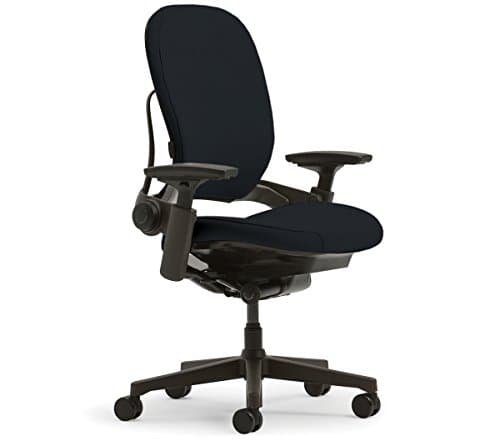
Steelcase Leap v2
The core reason chairs are uncomfortable is that they are built for an average and most bodies are not average, so the answer is a chair with enough range to be moved off the average. This one has the most of it here: lumbar height plus a separate firmness dial, armrest height published at 7 to 11 in from the seat, seat height 16 to 20.5 in, a 25 in backrest, a 19.25 in seat width, recline tension adjustment, a 400 lb rating and a 12-year multi-shift warranty. One range it does not have, and the honest reason it is not an automatic answer: the seat pan is fixed at 15.75 in.
Who it fits
Anyone whose proportions are not average and who needs the chair to move rather than their body to adapt.
Who it does not fit
Long-thighed sitters, and anyone under about 5 ft 1 in.
Published specifications
Seat height
16"–20.5"
Seat depth
15.75"
Seat width
19.25"
Back height
25"
Arm height
7"–11"
Weight capacity
400 lb
Lumbar
Height-adjustable lumbar plus a lower-back firmness dial
2. Best for Reason two answered cheaply: depth and back height
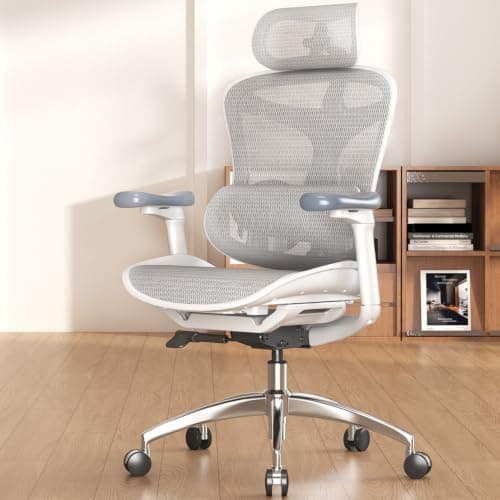
Sihoo Doro C300
The two specific discomforts people describe most are the front edge pressing behind the thighs and the lumbar bump landing in the wrong place, and this budget chair addresses both directly. Sihoo publishes an 18.11 in pan with depth adjustment and a backrest that moves through 18.11 to 21.65 in of height, plus a self-adapting dynamic lumbar, a 20.28 in seat width, a 330 lb rating and a three-year warranty. At the bottom of the market that combination is unusual - most cheap chairs answer discomfort with more foam, which is the wrong variable. Sihoo publishes overall height, 42 to 49 in, and no seat height.
Who it fits
Anyone whose discomfort is the seat edge or the backrest position, on a budget.
Who it does not fit
Anyone over 330 lb, and anyone who needs a confirmed seat height before ordering.
3. Best for Reason three answered: pressure, not posture
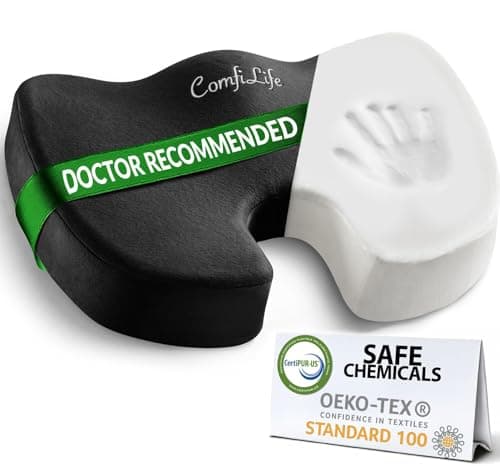
ComfiLife Premium Comfort Seat Cushion
Some discomfort is not about position at all - it is contact pressure concentrated at the sit bones and tailbone, which is why it arrives at a predictable time of day and does not care how good your posture is. ComfiLife publishes a 17.7 by 13.7 by 2.8 in memory foam cushion with a U-shaped coccyx cutout, which removes contact under the tailbone rather than softening it, and a stated lifetime replacement guarantee. It is also the cheapest diagnostic on this page: if it helps, your problem was pressure, and that tells you what to buy next. It raises your seat by nearly 3 in, so check desk clearance.
Who it fits
Anyone whose discomfort is a specific sore point rather than a general ache.
Who it does not fit
Anyone whose desk is already too high, and anyone needing back support - this gives none.
Why are office chairs so uncomfortable even expensive ones?+
Because price buys structure and warranty far more reliably than it buys fit. A premium chair with a fixed seat pan is the wrong geometry for a long-thighed sitter no matter what it cost, while a budget chair with a depth-adjustable pan fits them. Comfort is a fit question; price is a durability question.
Why does my office chair hurt after a few hours but not at first?+
Soft padding compresses under your sit bones over time until you are resting on what is beneath it, and a soft deep seat lets you sink and slide out of position. Discomfort that arrives at a predictable hour in a specific spot is contact pressure rather than posture.
Is it my chair or my desk?+
Set the chair so your feet are flat and your thighs level, then see where your elbows fall relative to the desk. If the desk is above them, it is the desk - and raising the chair to compensate costs you your foot support. The options are here.
Will a more expensive chair be more comfortable?+
Only if it adjusts through the ranges your body needs. Check the published seat height minimum, the seat depth range and the armrest height range against your own measurements before you spend - those three decide comfort more than material or price does.
Should I just get a standing desk instead?+
Standing all day has its own problems, and the useful version is alternating rather than replacing. Standing desk versus office chair sets out what each one does and does not solve.