Picked on published fit specifications, each linked to its source. How we pick.
The short answer
Piriformis pain is a pressure problem, not a posture problem. The goal is a seat that spreads load across the whole buttock instead of concentrating it, plus the ability to change position without getting up. That points at a wide, deflecting seat pan, an adjustable depth, and a hip angle above 90 degrees.
We earn a commission if you buy through our links. It does not change your price, and it does not change our ranking. Prices are pulled from Amazon's own API and stamped with the date we fetched them — where we have no live figure, the button opens the current price on the retailer's page instead. Full disclosure.
Ranked picks with published seat height, seat depth and weight capacity
#
Product
Best for
Seat height
Capacity
Price
1
Herman Miller Aeron
Suspension mesh seat, three shells, 16-18.5 in pan widths
#ad Seat height and capacity are the manufacturer's published figures, sourced under each pick. Prices come live from Amazon's own API and carry the date we fetched them; where a figure is missing the button opens the current price instead. Seat depth for every pick is in the spec block below. Seat depth summary: Herman Miller Aeron 16"–18.5" · HÅG Capisco 8106 13.4"–16.5" · Steelcase Leap v2 15.75" · Sihoo Doro C300 18.11" · Varier Variable Balans 12"
The mechanism, in one paragraph
The piriformis is a small muscle deep in the back of the hip, and the sciatic nerve runs past it on its way down the leg. The Merck Manual Professional Edition describes piriformis syndrome as compression of that nerve by that muscle, producing "pain in the buttocks and occasionally sciatica" - a chronic nagging ache, tingling or numbness that starts in the buttock and can run down the back of the thigh and calf.
The line that matters for anyone buying a chair is what Merck says makes it worse: pain increases "when the piriformis is pressed against the sciatic nerve", and the examples given are sitting on a toilet, a car seat, or a narrow bicycle seat. Every one of those is a seat that concentrates your weight into a small area under the buttock. Merck's advice for sitting-related pain is equally direct: stand, or if you cannot, "change positions to remove the source of pressure around the buttock".
That is the whole brief for a chair. Not posture, not lumbar curve, not ergonomics in the abstract - pressure distribution under the seat, and the ability to change position without standing up.
Why the obvious cushion is the wrong cushion
Search this problem and you will be sold a cutout seat cushion within about thirty seconds. Be careful: the U-shaped cushions that dominate those results are designed for coccyx and tailbone pain, and the cutout is at the midline, under the tailbone. The piriformis is not at the midline - it is out to the side, under the fleshy part of the buttock, which is exactly the part a coccyx cushion leaves bearing weight. For this problem that cushion either does nothing or concentrates load onto the area you are trying to unload.
There is a second trap. Any cushion raises you two to three inches, and if your seat was already set correctly your feet now leave the floor, which tips your pelvis and tightens the hip. Check your own number in seat height for your height before you add anything to the seat, and a footrest if the height has to go up.
What to look for in the chair itself
1. A wide seat, and a pan that deflects
The specification that matters most is the one almost nobody checks: seat width, and what the surface does under load. A narrow pan funnels your weight into a small area - which is precisely the bicycle-seat case Merck names. A wide pan spreads it. A tensioned mesh seat spreads it further again, because it keeps giving under load instead of compressing to a fixed dish the way foam does after a few hours.
Against that, firm unpadded mesh is genuinely worse for some people with an acutely sore buttock, and we are not going to pretend otherwise. Mesh versus foam sets out the trade honestly. If you have ever found a mesh chair unbearable, believe yourself over this page.
2. Seat depth you can set
A pan that is too long for your thigh has one predictable result: you slide forward to get your knees clear, your pelvis rolls back, and your weight lands behind your sit bones - right on the area you are trying to unload. A pan set to your thigh length carries load along the leg instead. This is the single most useful adjustment on this page and it is the reason a mid-priced chair with an adjustable pan can beat an expensive one without. Measure first in the seat depth guide, and chairs with adjustable seat depth lists everything here that has it.
3. A hip angle above 90 degrees
Sitting at a right angle keeps the hip flexed and the gluteal muscles compressed between your weight and the seat. Opening that angle - by raising the seat slightly, tilting the pan forward if your chair does that, or reclining - reduces both. This is the mechanism behind saddle seating and kneeling chairs, and it is also available for nothing on a chair you already own: how to adjust tilt and recline is the free version.
4. Somewhere else to sit
Merck's own advice is to change position. No single chair setting beats having two surfaces to work from, which is why a light alternative seat earns its place here even though it is a bad eight-hour chair. The rotation is the point, not the chair.
The five picks against those criteria
Published figures for every pick on this page, on the specifications that matter here
Read that table as two columns rather than five rows. The Doro C300 is the widest pan and it adjusts, which is why a budget chair sits mid-table on the criterion that matters most. The Variable Balans has the narrowest seat on the site and is still on this page, because its answer is to take the weight off the hip entirely rather than to spread it. Those are two different strategies and only one of them will suit you.
If the premium end is where you are shopping, Aeron versus Steelcase Series 1 is the comparison that matters here - the Series 1 adjusts its pan across 15.5 to 17.75 inches, which the Aeron does not do at all, and for a long thigh that is the more important specification than the mesh.
What to change today, for nothing
Raise the seat half an inch. A slightly open hip angle takes compression off the back of the hip. If your feet leave the floor, add a footrest.
Stop sitting on your wallet, phone or keys. Anything in a back pocket presses exactly where this problem lives, and it is the cheapest fix on this list.
Set the seat depth before anything else. If your chair has a sliding pan, two fingers of clearance behind the knee is the target. If it does not, stop sliding forward in your chair covers what to do instead.
Unlock the recline. A chair locked upright holds one hip angle all day. How to adjust your office chair runs the whole sequence in order.
Get up on a timer. Merck's advice is to stand or change position; how long you should sit has the published guidance on intervals.
Pain that gets confused with this
Buttock pain running down a leg has more than one cause and a chair page cannot tell you which one you have. If the pain is clearly nerve-like down the leg, the sciatica roundup is the neighboring page and the chair criteria there lean on lumbar support rather than seat pressure. If it sits at the side of the hip or in the groin, hip pain is a better match, and why your office chair hurts your hips works through the seat-geometry version of it. Pain right at the midline base of the spine is coccyx pain, which wants the cushion this page tells you to avoid.
The practical difference is what changes it. Piriformis pain is typically worse the longer you sit and better when you stand or shift weight off that side. Disc-driven pain is more often worse with bending and sitting forward, and does not care how you distribute weight across the seat. How to choose an office chair for back pain works the decision in order.
The picks in full
1. Best for Spreading the load instead of concentrating it
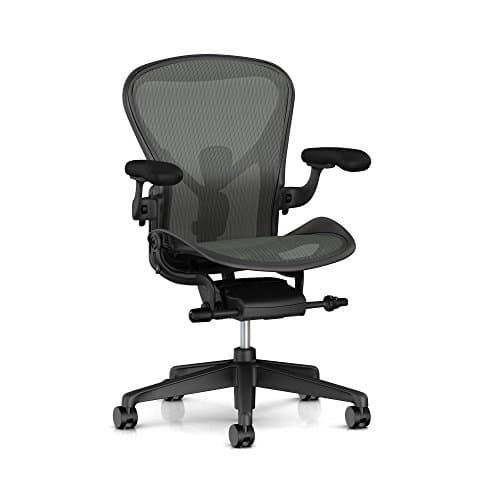
Herman Miller Aeron
Foam compresses to a fixed shape and then stops giving, which is how a seat that felt fine at hour one turns into a pressure point under one buttock by hour five. The Aeron's seat is tensioned mesh suspended in a frame, so it keeps deflecting under load and distributes weight across a wider contact area rather than letting it settle into two hard spots. The three shells matter here for a second reason: seat depth is 16, 17 or 18.5 inches depending on size, so you can get a pan that does not force you to perch on its front edge with your weight concentrated at the back of the thighs. Published seat heights run 14.4 to 22.8 inches across the range, on a 12-year three-shift warranty.
Who it fits
Anyone whose pain builds through a long day rather than starting the moment they sit, and anyone who has found every foam pan eventually develops a hot spot.
Who it does not fit
Anyone with acute buttock pain right now - firm mesh with no padding is worse, not better, for a minority of people and this is the group most likely to be in it. Anyone over 350 lb who does not specify the C shell. Anyone ordering without reading the size chart.
Published specifications
Seat height
14.4"–22.8"
Seat depth
16"–18.5"
Weight capacity
400 lb
Lumbar
PostureFit SL or adjustable lumbar pad, both height-adjustable
Sizes
A (seat height 14.4-19.3 in, seat depth 16 in, warrantied to 300 lb), B (14.8-22.8 in, 17 in, 350 lb), C (15.8-22.8 in, 18.5 in, 400 lb)
2. Best for Taking the buttock out of the load path
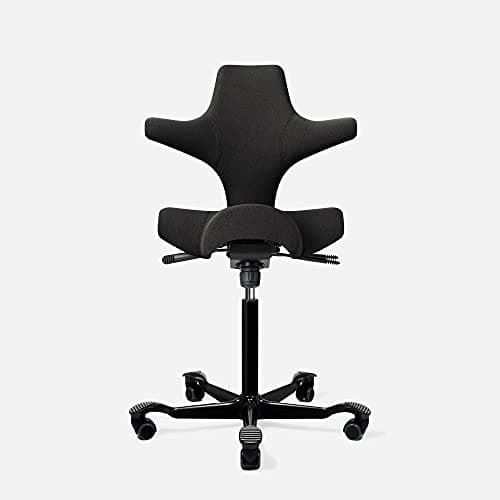
HÅG Capisco 8106
This is the most direct answer to the mechanism on this page. A saddle seat carries weight through the inner thighs and sit bones with the pelvis tipped forward, which moves load away from the muscle at the back of the hip instead of cushioning around it - and the Capisco can be sat on forwards, perched high, or turned around against the backrest, so no single contact point holds load for long. Flokk publishes 18.5 to 25.8 inches of seat height, a 13.4 to 16.5 inch adjustable seat depth and a 300-pound maximum user weight.
Who it fits
Anyone at a sit-stand or raised desk who wants to move between perching and sitting through the day.
Who it does not fit
Anyone at a fixed 29 to 30 inch desk - 18.5 inches is the floor and you will be perching whether you meant to or not. Anyone who needs lumbar support, which the saddle position does not give you. Anyone unwilling to spend a sore week adapting.
Published specifications
Seat height
18.5"–25.8"
Seat depth
13.4"–16.5"
Seat width
18.5"
Weight capacity
300 lb
Lumbar
None in the saddle position; the back support is a perch rest
Warranty
10-year against production defects; lifetime on gas lifts
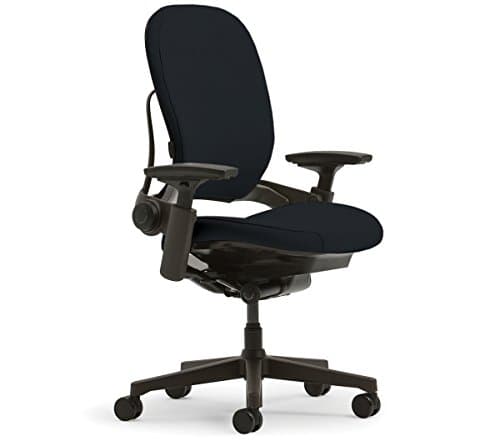
Buttock pain that refers down the leg is not always coming from the piriformis - a lumbar disc can produce almost the same picture, and the two are routinely confused. If your pain changes with how your lower back is supported, the Leap v2 is the chair in our registry that lets you place support at the level that hurts and set how hard it pushes as two separate adjustments. The recline is the other half: leaning back opens the hip angle past 90 degrees, which reduces how hard the gluteal muscles are compressed against the seat. Steelcase publishes 16 to 20.5 inches of seat height, a 25-inch backrest, 400 pounds and a 12-year multi-shift warranty.
Who it fits
Anyone whose pain has a lumbar component, anyone between 300 and 400 pounds, and anyone who sits more than eight hours.
Who it does not fit
Anyone with long thighs - the 15.75-inch pan is fixed and the shortest on this site, which means more of your weight lands at the back of the seat rather than along the thigh. That is the wrong direction for this problem.
Published specifications
Seat height
16"–20.5"
Seat depth
15.75"
Seat width
19.25"
Back height
25"
Arm height
7"–11"
Weight capacity
400 lb
Lumbar
Height-adjustable lumbar plus a lower-back firmness dial
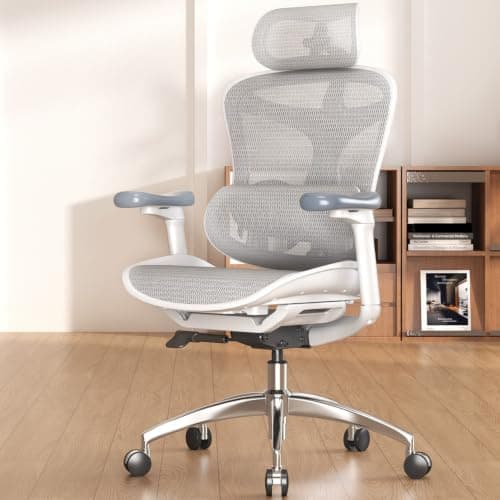
If you cannot spend premium money, buy seat depth adjustment. A pan that is too long makes you slide forward and roll back onto the buttock; a pan set to your thigh carries weight along the leg instead. The Doro C300 adjusts depth at a budget price, publishes a 20.28-inch seat width - roomy enough to spread load rather than funnel it - a 330-pound rating, a three-year warranty and a self-adapting lumbar that still reaches you when you are not pinned to the backrest.
Who it fits
Anyone who wants the one control that matters most here without spending premium money.
Who it does not fit
Anyone who needs a confirmed seat-height floor before ordering - Sihoo publishes overall chair height of 42 to 49 inches and no seat height at all, which is the single most important fit number missing. Anyone over 330 lb.
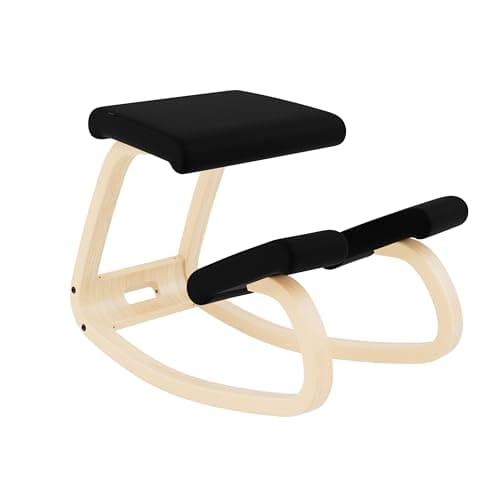
The most reliable relief for this problem is removing the pressure, and a kneeling chair does that structurally: part of your weight goes through your shins and the rest lands on a forward-tipped pelvis, so the back of the hip is carrying far less than it does in a task chair. The Variable Balans is the version with nothing in it to fail - a beech plywood sled you rock on, in a forward working zone and a rearward resting one - and at 11.5 pounds it is light enough to actually swap in for an hour or two and swap out again.
Who it fits
Anyone who can rotate between two seats through the day, and anyone who finds standing up is the only thing that helps.
Who it does not fit
Anyone over 240 lb - the lowest published capacity on this site. Anyone who needs to match the chair to an existing desk: the seat is fixed at 18 inches at the front edge and there is no gas lift. Anyone with knee or shin problems.
Published specifications
Seat height
18"–20.5"
Seat depth
12"
Seat width
16"
Weight capacity
240 lb
Lumbar
None - the open hip angle replaces a backrest
Sizes
One size, fixed - 18 in at the front edge, 20.5 in at the back, no gas lift
Warranty
7-year on the wood frame, 5-year on foam and fabric
Piriformis syndrome is diagnosed on physical examination, not from a chair review, and buttock pain that is severe, that has lasted more than a few weeks, or that comes with any of the following needs a clinician rather than a purchase:
Pain that runs below the knee, or numbness and tingling in the foot
Weakness in a leg or foot, or a foot that catches when you walk
Pain that wakes you at night, or that is worse lying down than sitting
Sudden onset after a fall, a lift, or an impact
Any change in bladder or bowel control, or numbness around the groin - this one is urgent
Pain with unexplained weight loss, fever, or a history of cancer
Merck lists stretching of the posterior hip, stopping the activities that provoke it, and in some cases a directed injection or anti-inflammatory medication as the actual management. A chair changes what your working day does to you while you get it looked at. That is the honest limit of what this page offers.
We are not doctors, physical therapists or certified ergonomists, and nothing here is medical advice. If you are in real pain, see someone who is qualified to look at it.
Questions people actually ask
What kind of chair is best for piriformis syndrome?+
One that spreads your weight across the whole buttock rather than concentrating it, and that lets you change position without standing up. In practice that means a wide seat pan, adjustable seat depth so you are not sliding forward onto the back of the hip, and a recline you can actually use. A narrow or hard pan is the thing to avoid - the Merck Manual specifically names narrow seats among the things that press the piriformis against the sciatic nerve.
Should I use a cushion for piriformis pain?+
Not a coccyx cutout cushion, which is what most searches return. Its cutout sits at the midline under the tailbone, while the piriformis is out to the side under the fleshy part of the buttock - the part that cushion leaves bearing weight. A broad, even cushion that spreads load can help; one shaped to offload the tailbone is built for a different problem.
Does sitting make piriformis syndrome worse?+
It is one of the classic aggravators. Merck describes the pain as worsening when the piriformis is pressed against the sciatic nerve, and gives sitting on a toilet, a car seat or a narrow bicycle seat as examples - all seats that concentrate load into a small area. The advice given for sitting-related pain is to stand, or to change position to take the pressure off the buttock.
Is piriformis syndrome the same thing as sciatica?+
Not quite. Sciatica is the symptom - pain along the sciatic nerve - and piriformis syndrome is one possible cause of it, where the compression happens at the hip rather than at the spine. A lumbar disc is the more common cause and produces a similar picture. That distinction matters for chair shopping because it changes what you are buying: the sciatica page leans on lumbar support, this one leans on seat pressure.
Is a kneeling chair good for piriformis syndrome?+
For part of a day, and for a structural reason: some of your weight goes through the shins and the pelvis tips forward, so the back of the hip carries much less than it does in a task chair. It is not a chair most people can use for eight hours - shin pressure and the absence of a backrest end a session well before that - so treat it as a second seat to rotate into. Our Variable Balans review covers what you give up, and kneeling chair versus office chair sets out the trade.
Should I get a standing desk instead?+
Standing does remove the pressure, which is the mechanism this whole page is about, so it helps more directly than most chair changes. It is not a complete answer - standing all day has its own costs - standing desk versus office chair covers it, and the realistic setup is both, with a chair that reaches a raised desk.