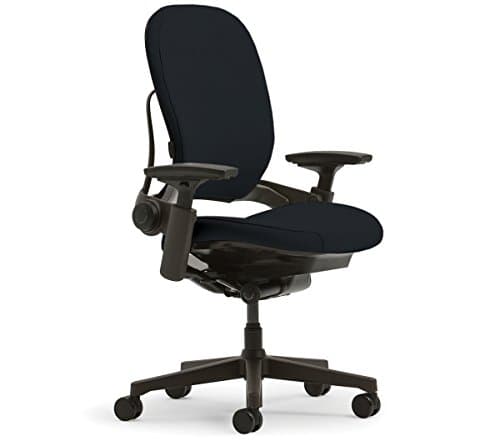
Every listing in this category says high back, your shoulders ache by mid-afternoon, and nobody tells you how tall the backrest actually is or where the top of it will land on your spine.
Picked on published fit specifications, each linked to its source. How we pick.
The short answer
High back is an unregulated term, so the only useful figure is published back height measured from the seat. Four chairs on this site publish one: the Leap v2 at 25 inches, the HON Ignition 2.0 at 24.75, the Gesture at 24.06 and the Embody at 23.5. One lets you raise the backrest instead, which matters more than raw height.
We earn a commission if you buy through our links. It does not change your price, and it does not change our ranking. Prices are pulled from Amazon's own API and stamped with the date we fetched them — where we have no live figure, the button opens the current price on the retailer's page instead. Full disclosure.
Ranked picks with published seat height, seat depth and weight capacity
#ad Seat height and capacity are the manufacturer's published figures, sourced under each pick. Prices come live from Amazon's own API and carry the date we fetched them; where a figure is missing the button opens the current price instead. Seat depth for every pick is in the spec block below. Seat depth summary: Steelcase Leap v2 15.75" · HON Ignition 2.0 Big and Tall 18.74" · Steelcase Gesture 15.75"–18.5" · Sihoo Doro C300 18.11" · Hbada E3 Pro —
"High back" is not a specification
No standards body defines it. A listing can call a chair high back because the backrest reaches the shoulder blades, because it has a headrest bolted on top, or because the photograph looks tall. The only thing that tells you anything is a published back height, measured from the seat - and most of this market does not publish one.
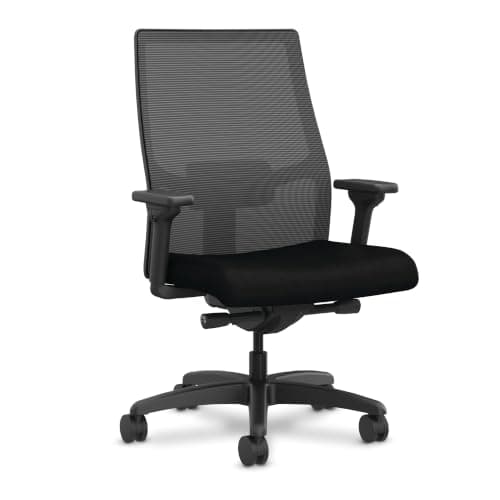
Four chairs on this site do: the Steelcase Leap v2 at 25 inches, the HON Ignition 2.0 Big and Tall at 24.75, the Steelcase Gesture at 24.0625 and the Herman Miller Embody at 23.5 inches per BTOD's measurements. Everything else is sold on overall height, which is a different and much less useful number.
Why overall height tells you almost nothing
An overall figure of 42 to 49 inches is the floor-to-top-of-chair measurement. It contains the casters, the gas cylinder at whatever height it happens to be, the seat, the backrest and the headrest if there is one. Two chairs with identical overall heights can have backrests four inches apart, and the one with the taller headrest will usually be the one with the shorter back.
When a brand publishes only an overall height, treat the back height as unknown. That is not a reason to rule the chair out - two of our five picks are in exactly that position - but it is a reason to buy on something else, like whether the backrest adjusts.
The three things that decide whether a tall back helps you
1. Where the top of the back lands on your spine
Which depends on your sitting height, not your standing height. A 25-inch back on a sitter with a long torso reaches the shoulder blades; the same back on a short torso reaches the base of the neck and pushes the head forward. This is the failure people describe as "the chair makes my neck ache", and it is a fit problem rather than a chair problem.
2. Whether the backrest height adjusts
This matters more than the raw figure, and it is rarer. A backrest that raises and lowers moves the lumbar curve and the shoulder contact together, which is the only way a single chair fits two different torsos. In our registry the Sihoo Doro C300 publishes 18.11 to 21.65 inches of backrest height and the Hbada E3 Pro publishes 3.15 inches of travel. The premium chairs mostly do not adjust the back at all - they move the lumbar pad instead, which is a narrower fix.
3. Whether the size of the shell changes
The Herman Miller Aeron is the clearest example of this approach: three shells, published overall heights of 34.2 to 38.5 inches in a size A and 40 to 45.4 inches in a size C. Herman Miller does not publish a back height for any of them, but the difference between the shells is mostly back, and choosing the right one does more for upper-back contact than any adjustment. See best office chairs for a tall person for where that lands.
What a high back does not do
It does not support your head. That is a headrest, and a headrest only touches your head when you are reclined far enough for it to. Do you need a headrest on an office chair works through the geometry; the short version is that upright work gets nothing from one.
It does not fix lumbar placement. A tall back with a fixed bump at the wrong height is worse than a short back with support you can move. Chairs with adjustable lumbar sorts the registry by what is actually in the box.
It does not make a chair breathe. More backrest is more material against your back. If you finish the day warm, best mesh office chairs is the page that deals with it.
The five picks on published figures
Published manufacturer and retailer figures. A blank means the brand does not publish that measurement.
Chair
Back height from seat
Backrest height adjusts
Headrest
Capacity
Warranty
Steelcase Leap v2
25 in
No
No
400 lb
12-year, multi-shift
HON Ignition 2.0 Big and Tall
24.75 in (back 22.75 in wide)
No
Not on this model
450 lb
HON Full Lifetime (6-8 hr daily use)
Steelcase Gesture
24.06 in (back 16.25 in wide)
No; three seat-height cylinders instead
Optional
400 lb
Limited Lifetime - 12 years multi-shift
Sihoo Doro C300
Not published
Yes - 18.11 to 21.65 in
Yes
330 lb
3-year
Hbada E3 Pro
Not published (43.7-51.8 in overall)
Yes - 3.15 in of travel
Yes, 4D per the listing
330 lb
5-year base, gas lift, casters; 3-year other
Herman Miller Embody (not picked)
23.5 in per BTOD
No - backfit changes the curve instead
No
300 lb
12-year
The Embody is in that table rather than in the picks for a reason worth stating: its back is shorter than the three above it and it is the most expensive chair in the group, so nobody should buy it because it is high-backed. It belongs in this conversation only because the backfit control changes the curvature of the whole back along its length, which is a different answer to the same upper-back complaint - best office chairs for upper back pain is where that argument belongs.
How to check a high back against your own body
Sit upright on a hard chair and have someone measure from the seat to the bottom of your shoulder blades. That figure is what the backrest has to reach to support your mid-back; anything above it is contact you will only use when reclined. Most adults land somewhere between 16 and 20 inches, which is why a 24-inch backrest is generous rather than necessary, and why a backrest you can lower is often the better buy.
Then check the two numbers that decide everything else - seat height for your height and seat depth for your thigh. A tall back on a chair that is two inches too high for you will not help, because you will be perched forward and not touching it.
Who should not buy a high back chair
Anyone with a short torso who cannot adjust the backrest. The top edge lands at the neck and pushes the head forward. Buy the chair whose back moves, or a smaller shell.
Anyone who sits forward over a keyboard all day. If your back never touches the backrest, the backrest's height is irrelevant and your money belongs in seat depth and armrests instead.
Anyone buying a tall back as a neck fix. Desk neck pain usually comes from unsupported arms and a monitor at the wrong height - best office chairs for neck pain starts there instead.
If the budget rather than the backrest is the real constraint, best office chairs under $700 covers the band three of these picks sit in, and Steelcase Gesture alternatives works through what the chair at the top of this page is actually bought for.
The picks in full
1. Best for The tallest published back you can actually buy
Steelcase Leap v2
At a published 25 inches from the seat, the Leap v2 has the tallest backrest of any chair in our registry with a live listing, and the back does more than stand tall: Steelcase's LiveBack shell changes shape as you recline, so the contact does not disappear the moment you lean. The lumbar pad slides up and down with a separate firmness dial, which means you can place support where your back bends rather than where the factory guessed. Published seat height 16 to 20.5 inches, arms 7 to 11 inches high, 400-pound rating, 12-year multi-shift warranty.
Who it fits
Longer torsos who want the backrest to reach the shoulder blades, from about 5 ft 4 in up.
Who it does not fit
Anyone who wants head support - there is no headrest on a standard Leap - and anyone under about 5 ft 1 in.
Published specifications
Seat height
16"–20.5"
Seat depth
15.75"
Seat width
19.25"
Back height
25"
Arm height
7"–11"
Weight capacity
400 lb
Lumbar
Height-adjustable lumbar plus a lower-back firmness dial
2. Best for A tall back on a frame built for a bigger body
HON Ignition 2.0 Big and Tall
A tall backrest is no use on a chair that cannot carry you. HON publishes a 24.75-inch back on a 23-inch seat with a 450-pound rating - the highest capacity on this site - plus a 17 to 21.5 inch seat height, adjustable lumbar as standard rather than as a cost option, and the HON Full Lifetime Warranty. Office Depot's listing also publishes the back width at 22.75 inches, which is the figure that decides whether a wide frame is supported or perched against two edges.
Who it fits
Bigger and taller sitters who need the back and the base to match, above about 5 ft 8 in.
Who it does not fit
Anyone under about 5 ft 6 in - the 17-inch seat floor and the deep pan both fight a shorter leg - and anyone sitting past the 6-to-8-hour daily rating.
3. Best for A tall back with the best arms in the category
Steelcase Gesture
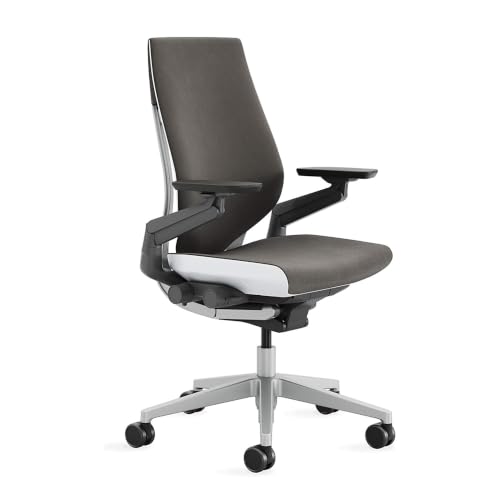
The Gesture publishes a back height of 24.0625 inches from the seat and a back width of 16.25 inches, on a 20-inch seat rated to 400 pounds. What makes it worth a place here rather than just a tall number is the cylinder system: short, standard and tall options spanning 14.5 to 22.5 inches of seat height, which is how you get the top of a fixed-height backrest to land in the right place on your spine. Steelcase's arms rotate through a full 360 degrees, and adjustable lumbar is an option with 4 inches of travel, not standard equipment.
Who it fits
Anyone whose discomfort is in the shoulders, arms or neck, at either end of the height range.
Who it does not fit
Anyone buying mainly for lower-back support in the base configuration, and anyone who finds choosing a cylinder at order time a risk they do not want.
Published specifications
Seat height
16"–21"
Seat depth
15.75"–18.5"
Seat width
20"
Back height
24.06"
Weight capacity
400 lb
Lumbar
Core Equalizer as standard; optional adjustable lumbar with 4 in of height travel
Sizes
Three cylinder options - short (14.5-18.25 in), standard (16-21 in), tall (17-22.5 in). The standard figure is the one quoted above.
Warranty
Steelcase Limited Lifetime - 12 years, multi-shift, 24/7 parts and labor
4. Best for The budget pick, and the only backrest here that raises
Sihoo Doro C300
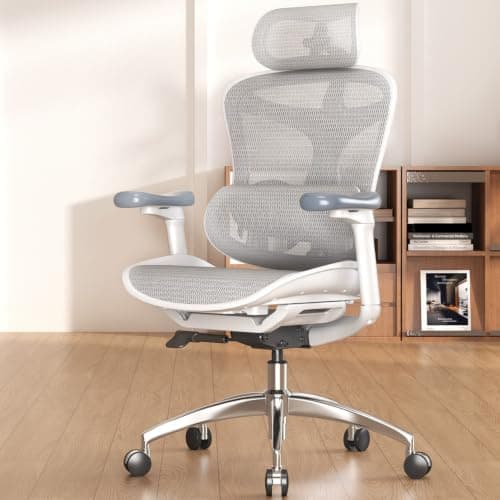
This is the most useful chair on the page for the money, because it changes the right variable. Sihoo publishes a backrest that lifts through 18.11 to 21.65 inches, which means the lumbar curve and the shoulder support move with it rather than staying where the factory set them. For a shorter torso, a back you can lower beats a taller back you cannot. It also publishes an 18.11-inch seat depth that adjusts, a 20.28-inch seat width, coordinated 4D armrests, a 330-pound rating and a three-year warranty.
Who it fits
Shorter and average torsos, up to 330 lb, who want the support placed rather than assumed.
Who it does not fit
Anyone who needs a published seat height before ordering - Sihoo publishes overall height only - and anyone who wants a warranty beyond three years.
5. Best for The tallest chair here overall, with head support
Hbada E3 Pro
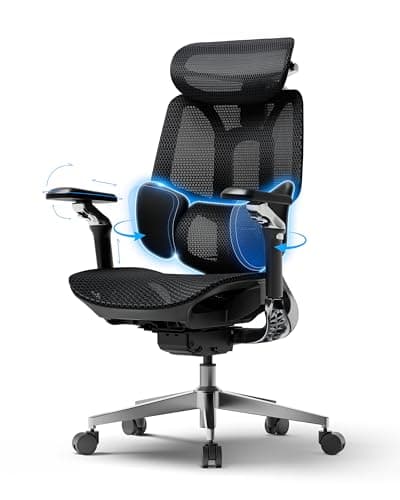
Hbada publishes an overall height of 43.7 to 51.8 inches, taller than anything else on this page, and the current Amazon listing describes a 4D headrest and 720-degree armrests. Backrest height adjusts through 3.15 inches, and the lumbar is a three-zone dynamic system rather than a pad you set. Hbada claims a fit range of 5 feet 1 to 6 feet 5. The honest limit is that overall height is not back height - it includes the headrest and the casters - so this is the one pick here where we cannot tell you how far the back reaches up your spine.
Who it fits
Taller sitters who want head support included, and anyone buying on a claimed fit range rather than a seat-height figure.
Who it does not fit
Anyone over 330 lb, and anyone who wants the backrest figure itself published rather than inferred from an overall height.
Published specifications
Overall height
43.7"–51.8" (seat height not published)
Seat width
25.6"
Weight capacity
330 lb
Lumbar
Three-zone dynamic lumbar, 3.15 in of backrest height adjustment
Maker's fit range
5 ft 1 in to 6 ft 5 in, per Hbada
Warranty
5-year on base, gas lift and casters; 3-year on other components
On published figures, the Steelcase Leap v2 - a 25-inch backrest from the seat, the tallest in our registry with a live listing, on a 400-pound frame with a 12-year multi-shift warranty and a lumbar pad that slides and firms up. If you need more capacity, the HON Ignition 2.0 Big and Tall publishes 24.75 inches at 450 pounds.
How tall is a high back office chair?+
There is no standard, which is the problem. Among the chairs that publish a back height measured from the seat, the range on this page runs 23.5 to 25 inches. Overall chair heights of 42 to 52 inches are quoted far more often and include the casters, the seat and any headrest, so they are not comparable.
Is a high back chair better for back pain?+
Only if the support lands where your back needs it. A tall backrest with a fixed lumbar bump at the wrong height helps less than a shorter back with support you can position. Start from best office chairs for lower back pain if pain rather than height is the reason you are shopping.
Do high back chairs come with a headrest?+
Some do and the best-specified ones often do not. Neither Steelcase chair here includes a headrest as standard - the Gesture offers one as an option - while both budget picks include one. A headrest is a separate feature from a tall back and answers a different question.
What is the best budget high back office chair?+
The Sihoo Doro C300, because it is the one chair at this money whose backrest height actually adjusts - through a published 18.11 to 21.65 inches - which matters more for fit than a taller fixed back does.