Every chair leaves your feet dangling, the front edge presses into the backs of your knees, and the reviews are all written by people five inches taller than you.
Picked on published fit specifications, not on hands-on testing. How we pick.
The short answer
The Herman Miller Aeron in size A is the only chair here that reaches the seat height a 5 ft 0 in sitter needs - a published 14.4 in minimum against a target of about 15 in. Everything else on this page needs a footrest to work, and that is the honest answer rather than a workaround.
We earn a commission if you buy through our links. It does not change your price, and it does not change our ranking. Prices are pulled from Amazon's own API and stamped with the date we fetched them — where we have no live figure, the button opens the current price on the retailer's page instead. Full disclosure.
Ranked picks with published seat height, seat depth and weight capacity
#ad Seat height and capacity are the manufacturer's published figures, sourced under each pick. Prices come live from Amazon's own API and carry the date we fetched them; where a figure is missing the button opens the current price instead. Seat depth for every pick is in the spec block below. Seat depth summary: Herman Miller Aeron 16"–18.5" · Steelcase Series 1 15.5"–17.75" · Sihoo Doro C300 18.11" · ComfiLife Premium Comfort Seat Cushion —
Your two numbers, worked out
This is one of the few chair questions with real arithmetic behind it. The BIFMA-derived anthropometric tables give popliteal height - floor to the underside of the knee, which is the measurement a seat height has to match - as a ratio of standing height. We use 0.25 for the minimum a chair must reach and 0.27 for the height you want available above it. Buttock-popliteal length, which decides seat depth, runs at 0.273 of standing height, and we subtract an inch for knee clearance.
What a 5 ft 0 in sitter needs, from the published ratios
Measurement
The figure
What it means
Minimum seat height
15.0 in
Below this and your feet cannot sit flat on the floor
Seat height you want available
16.2 in
Room to raise the chair when you want it higher
Maximum seat depth
15.4 in
Above this and the front edge presses behind your knees
Now compare that against what chairs actually publish, and the problem becomes obvious rather than mysterious. The industry builds around a sitter five to eight inches taller than you.
Published minimum seat height and minimum seat depth, against the 5 ft 0 in targets
Chair
Minimum seat height (in)
Minimum seat depth (in)
Reaches 15.0 in?
Herman Miller Aeron, size A
14.4
16 fixed
Yes
Steelcase Leap v2
16
15.75 fixed
No
Herman Miller Embody
16
15 adjustable
No
Steelcase Series 1
16.5
15.5 adjustable
No
Branch Ergonomic Chair
17
Not published
No
HON Ignition 2.0 Big and Tall
17
18.74 fixed
No
Autonomous ErgoChair Pro
18.5
19 adjustable
No - fit range starts at 5 ft 4 in
Sihoo Doro C300 / M57
Not published
18.11
Unknown - no seat height published
Hbada E3 Pro
Not published
Not published
Unknown - fit range claims 5 ft 1 in
One row out of nine clears the bar, and only in one of its three sizes. That is the real state of the market for a 5 ft 0 in sitter, and any page that tells you otherwise is working from marketing copy rather than specifications. The broader version of this list is best office chairs for a short person, and the full lookup table for every height is in seat height for your height.
So the honest answer is a footrest
Not a consolation prize - a correct solution. The purpose of a seat height is to let your feet rest flat on a surface with your thighs roughly level and your knees near a right angle. OSHA's workstation guidance treats a footrest as a legitimate way to achieve that when the seat cannot come down far enough, and that is exactly the situation the table above describes.
Which means the shopping decision changes shape. Instead of hunting the one chair that reaches 15 inches, you buy the chair with the best back and the shortest pan, raise it to a height where your elbows meet the desk, and put a footrest under you. Seat depth stays a hard constraint because no accessory fixes a pan that is too long - do you need a footrest with an office chair is the full case, and the seat depth guide is how you check your own figure in two minutes.
Armrests are the third problem
Less discussed and quietly important. If a chair's armrests do not come down far enough, they hold your shoulders up for the whole working day, and that is felt across the top of the back rather than in the arms. At 5 ft 0 in you are shopping the bottom of every adjustment range at once, armrests included. The Leap v2 publishes 7 to 11 in of armrest height measured from the seat, the lowest published figure in our registry; the ErgoChair Pro publishes 11 to 14 in, which is a tall chair being honest about who it is for.
Seat width works the other way round and catches people out. A wide seat puts the armrests further apart, so a 25.6 in pan can leave your forearms unable to reach them with your shoulders relaxed. Narrower is usually better here, not worse - the seat width guide has the measurement, and do you need armrests covers dropping them out of use entirely.
Why this page and not the short person page
Our short person page covers roughly 5 ft 0 in to 5 ft 4 in, which is a five-inch spread - and five inches changes the answer completely, because the minimum seat height target moves from 15.0 to 16.0 in and chairs that fail at the bottom of that range pass at the top. This page is the bottom end of it, worked out specifically, where the Aeron size A stops being one option among several and becomes the only chair that clears the bar unaided.
Raise the chair until your elbows are level with the desk surface. Start from the desk, not the floor - the desk height is fixed and your chair is not.
Put something flat under your feet. A footrest, a box, a ream of paper. Thighs level, feet supported.
Shorten the seat pan if it adjusts. Two to three fingers of gap between the front edge and the back of your knee.
Lower the armrests until your shoulders drop. If they will not go low enough, stop using them.
Find the lumbar support with your hand and move it down. It should sit at the inward curve of your lower back, not above it.
The picks in full
1. Best for The only published seat height that reaches
Herman Miller Aeron
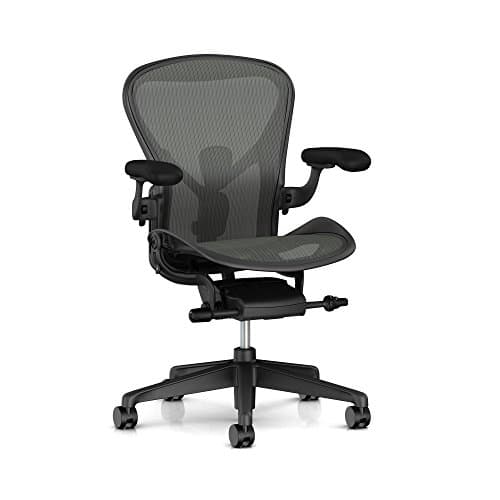
This page has a hard arithmetic answer and this is it. At 5 ft 0 in the BIFMA-derived tables put the seat height you need at about 15 in, and the Aeron in size A is the only chair in our registry whose published minimum - 14.4 in - goes below it. Size A also carries the shortest pan Herman Miller makes, 16 in, which matters as much: a 5 ft 0 in sitter needs a pan under about 15.4 in, so even this one is marginal and you should check it against your own measurement. The size is the whole point - order a B or a C and you have bought a chair that cannot go low enough. Warranted to 300 lb in size A, 12-year, three-shift.
Who it fits
Anyone at or below about 5 ft 2 in who wants the chair to do the work rather than a footrest.
Who it does not fit
Anyone who will not confirm they are ordering size A, and anyone over 300 lb in that size.
Published specifications
Seat height
14.4"–22.8"
Seat depth
16"–18.5"
Weight capacity
400 lb
Lumbar
PostureFit SL or adjustable lumbar pad, both height-adjustable
Sizes
A (seat height 14.4-19.3 in, seat depth 16 in, warrantied to 300 lb), B (14.8-22.8 in, 17 in, 350 lb), C (15.8-22.8 in, 18.5 in, 400 lb)
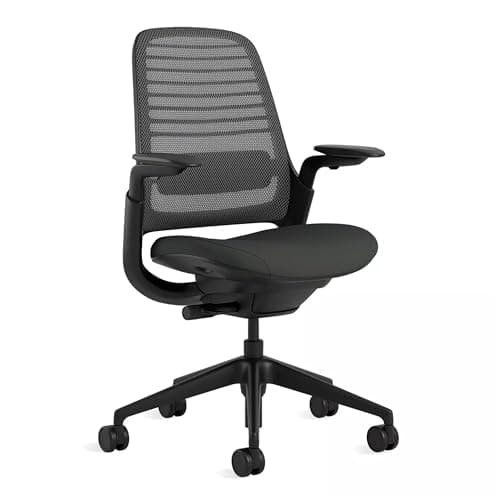
At a published 16.5 in minimum this does not reach the 15 in a 5 ft 0 in sitter needs, and no amount of enthusiasm changes that - which is why it sits second rather than first. What it does have is the shortest adjustable pan here: functional seat depth published at 15.5 to 17.75 in, and 15.5 in is within about a tenth of an inch of the figure the tables give for a 5 ft 0 in sitter. That is the specification that stops the front edge pressing behind your knees, and it is the complaint petite sitters raise most. Pair it with a footrest and you have a 400 lb rating and a 12-year multi-shift warranty at mid-tier money.
Who it fits
Anyone happy to add a footrest, and anyone whose main complaint is the seat edge rather than dangling feet.
Who it does not fit
Anyone who needs their feet flat on the floor with no footrest - 16.5 in will not get you there.
Published specifications
Seat height
16.5"–21.5"
Seat depth
15.5"–17.75"
Weight capacity
400 lb
Lumbar
Optional adjustable lumbar; weight-activated tension as standard
3. Best for The budget pick, with one caveat up front
Sihoo Doro C300
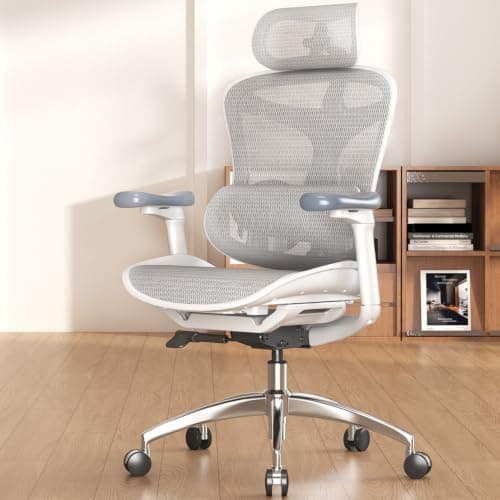
The budget tier has a problem for petite sitters and it is worth naming: Sihoo publishes overall height, 42 to 49 in, and no seat height from the floor at all, so you cannot check the one figure that decides this page before ordering. What it does publish is useful: an 18.11 in pan with depth adjustment, a backrest that moves through 18.11 to 21.65 in of height so support lands at your curve rather than between your shoulder blades, a self-adapting dynamic lumbar, a 330 lb rating and a three-year warranty. Backrest height adjustment is unusually valuable at 5 ft 0 in, because a fixed back designed for a 5 ft 9 in sitter puts its lumbar bump above your waist.
Who it fits
Anyone on a budget who needs backrest height adjustment and will measure the delivered seat height themselves.
Who it does not fit
Anyone who needs a confirmed seat height before ordering, and anyone over 330 lb.
4. Best for When the pan is too deep and the chair is staying
ComfiLife Premium Comfort Seat Cushion
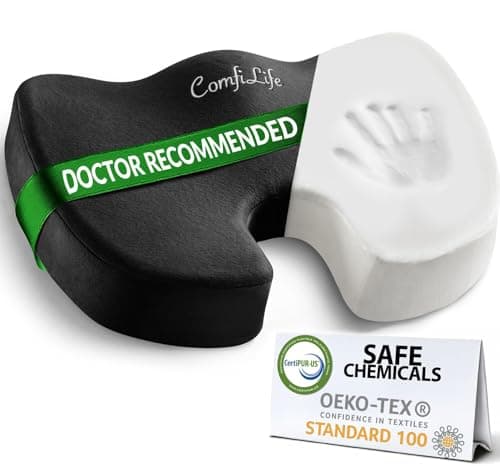
On this page a cushion solves a different problem than usual. A 5 ft 0 in sitter in a pan built for someone 5 ft 9 in sits with the front edge under the knees, slides forward to escape it, and ends up perched on the front third of the seat with no back contact at all. ComfiLife publishes a 17.7 by 13.7 by 2.8 in memory foam cushion with a U-shaped coccyx cutout and a stated lifetime replacement guarantee; sitting on it effectively shortens how far back you sit and takes pressure off the tailbone where perching concentrates it. The trade-off is blunt: it adds nearly 3 in of seat height, which on this page is the wrong direction - so it belongs with a footrest, not instead of one.
Who it fits
Anyone perching on the front of a too-deep seat, and anyone with tailbone pain from doing it.
Who it does not fit
Anyone whose feet already do not reach the floor without a footrest - this makes that worse.
A chair that fits removes a cause. It does not treat a disc, a joint or a nerve, and a correctly set-up chair does not make a serious symptom less serious. Stop shopping and get assessed if you have:
Pain that runs below the knee, or numbness and tingling in the foot
Weakness in a leg or foot, or a foot that catches when you walk
Pain that wakes you at night, or that is worse lying down than sitting
Sudden onset after a fall, a lift, or an impact
Any change in bladder or bowel control, or numbness around the groin - this one is urgent
Pain with unexplained weight loss, fever, or a history of cancer
NIAMS notes that most people find relief within about six weeks. Pain that is not improving on that timescale belongs with a clinician rather than a different chair.
We are not doctors, physical therapists or certified ergonomists, and nothing here is medical advice. If you are in real pain, see someone who is qualified to look at it.
Questions people actually ask
What is the best office chair for a 5-foot woman?+
The Herman Miller Aeron in size A. It is the only chair in our registry whose published minimum seat height - 14.4 in - goes below the roughly 15 in a 5 ft 0 in sitter needs. Size matters absolutely here: the B and C shells start at 14.8 and 15.8 in and have longer pans.
What seat height do I need if I am 5 feet tall?+
About 15.0 in as the minimum the chair must reach, and about 16.2 in available above it, using the BIFMA-derived ratios of 0.25 and 0.27 of standing height. Seat depth should be no more than about 15.4 in. Those three figures are the whole shopping list - the lookup table has every height.
Is a footrest a compromise?+
No. The point of seat height is to get your feet supported flat with your thighs level, and a footrest achieves that when the chair cannot come down far enough. OSHA's guidance treats it as a legitimate solution rather than a workaround - and for a 5 ft 0 in sitter it is usually the realistic one.
Why do budget chairs not publish a seat height?+
Several publish overall height instead - Sihoo gives 42 to 49 in, Hbada 43.7 to 51.8 in - which includes the headrest and tells you nothing about where your feet land. We record those as not published rather than estimate them, which means you cannot verify the one figure that matters most to you before ordering.
Does a smaller chair mean a worse chair?+
No, and at this height narrower is often better: a wide seat pushes the armrests further apart than your forearms can comfortably reach. What you are shopping for is the bottom of every adjustment range - seat height, seat depth, armrest height, lumbar height - not a smaller version of a big chair.