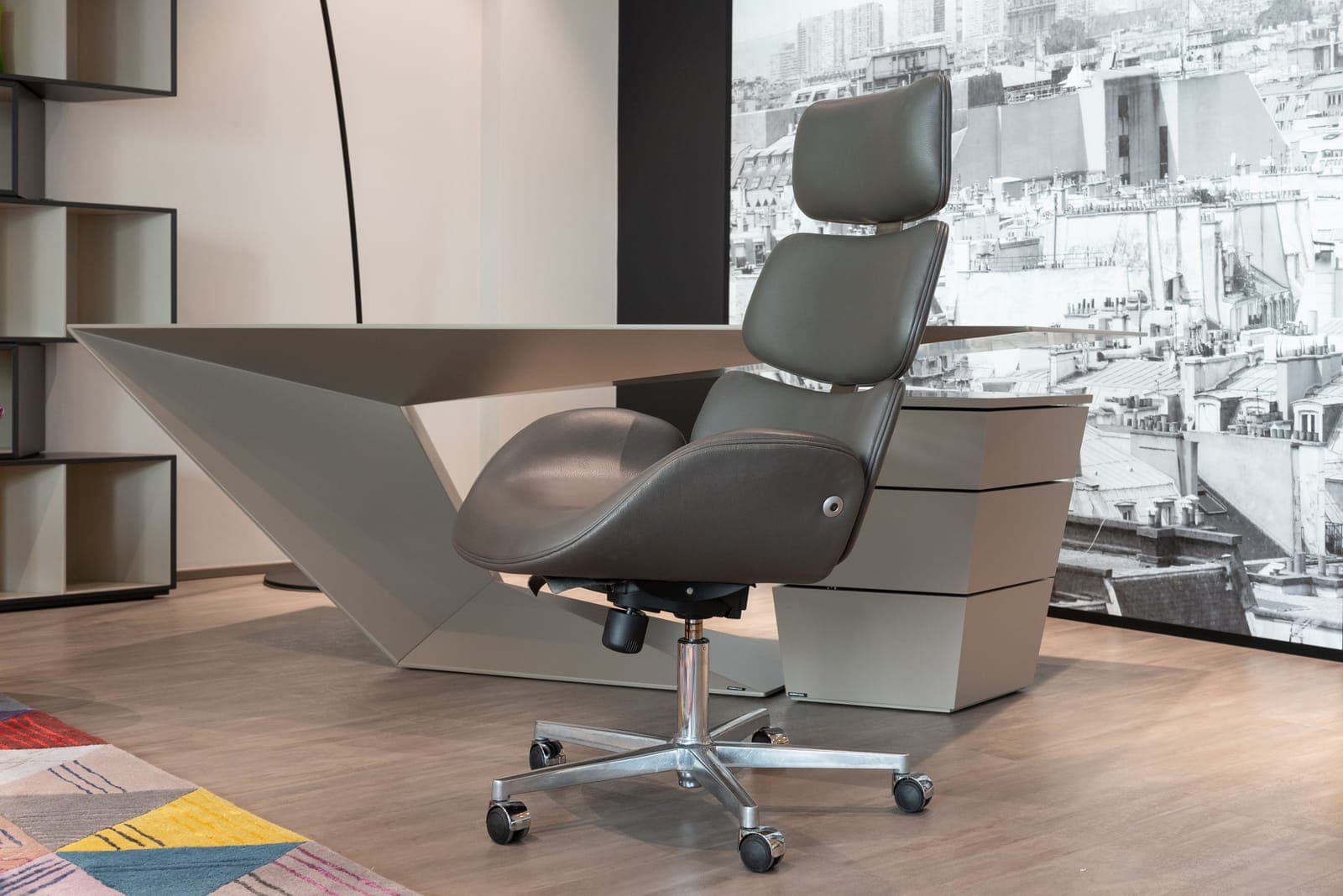
Herman Miller sells two flagship chairs at similar money and the marketing for both is about design language rather than about what they do differently.
Picked on published fit specifications, not on hands-on testing. How we pick.
The short answer
These are not variations on a theme. The Aeron sizes the chair to your body and suspends you in tensioned mesh. The Embody comes in one size and shapes the whole backrest to your spine instead of pushing a lumbar pad into it. Different premises, and your body decides which is right.
We earn a commission if you buy through our links. It does not change your price, and it does not change our ranking. We do not publish prices, because we do not run a live price feed — every button opens the current price on the retailer's own page. Full disclosure.
Ranked picks with published seat height, seat depth and weight capacity
#ad Seat height and capacity are the manufacturer's published figures, sourced under each pick. We do not publish prices — each button opens the current price on the retailer's own page. Seat depth for every pick is in the spec block below. Seat depth summary: Herman Miller Aeron 16"–18.5" · Herman Miller Embody 15"–18"
The verdict, up front
Choose the Aeron if your body is at either end of the height range, you are over 300 pounds, or you overheat. Shell sizing and genuine suspension mesh are things the Embody does not offer.
Choose the Embody if you have tried chairs with good adjustable lumbar pads and found the pad itself to be the problem, or if you need a seat pan shorter than 16 inches with adjustment on top.
Choose neither if what you actually want is maximum control over lumbar placement and firmness. That is a Steelcase Leap v2, and it costs less.
Side by side, on published figures
Herman Miller Aeron against Herman Miller Embody, published specifications
Herman Miller's position on the Aeron is that a chair cannot adjust its way into fitting a 5-foot person and a 6-foot-5 person equally, so it should be built in three sizes instead. The published numbers bear that out: the difference between an A and a C is not a setting, it is 2.5 inches of seat pan, six inches of overall height and a hundred pounds of warranty rating.
The mesh is a separate argument: that a tensioned suspension surface distributes pressure and dissipates heat better than any foam pan, and that firmness is a fair price for both.
The Embody: support should be distributed, not concentrated
The Embody's position is that pushing a pad into one region of the back is crude - that it creates a pressure point as often as it relieves one - and that the better answer is to shape the entire backrest along its length. The backfit control does that, and there is no lumbar pad at all.
The second premise is that you move constantly, and that a chair should track the movement rather than hold you still. The layered seat and the flexing back follow from that.
Who each one is wrong for
The Aeron is wrong for
Anyone who wants any padding at all. The seat is unyielding by design.
Anyone whose thigh length falls between two shells - depth is fixed, and the Embody adjusts across 15 to 18 inches.
Anyone who has found lumbar pads uncomfortable at the exact level of their problem.
The Embody is wrong for
Anyone over 300 lb. That is the published ceiling, and it is lower than both Sihoo budget chairs.
Anyone at the extremes of the height range. One shell, and a 16-inch seat floor.
Anyone who overheats. The layered seat breathes better than foam and considerably less well than suspension mesh.
Anyone with a specific, localized sore point. Distributed support is the design intent and it means no targeted pressure.
The cheaper chair that does most of this
Both of these cost premium money for a design philosophy. If what you want is practical control over where support sits and how hard it pushes, a Leap v2 does it better than either and costs less. If what you want is a twelve-year warranty on something durable, a Series 1 costs a fraction of both.
The Aeron's argument is that fit is a sizing problem rather than an adjustment problem, and it backs that with three physically different shells: published seat heights of 14.4, 14.8 and 15.8 inches at the bottom, seat depths of 16, 17 and 18.5 inches, and warranty ratings of 300, 350 and 400 pounds. The tensioned suspension seat is the second argument, and it is the only genuine one in this pair - the Embody's layered seat breathes better than foam and not as well as this.
Who it fits
Anyone at either end of the height range, anyone over 300 lb, and anyone who overheats.
Who it does not fit
Anyone who dislikes firm unpadded mesh, and anyone who finds a lumbar pad itself uncomfortable - the Embody is the answer to that.
Published specifications
Seat height
14.4"–22.8"
Seat depth
16"–18.5"
Weight capacity
400 lb
Lumbar
PostureFit SL or adjustable lumbar pad, both height-adjustable
Sizes
A (seat height 14.4-19.3 in, seat depth 16 in, warrantied to 300 lb), B (14.8-22.8 in, 17 in, 350 lb), C (15.8-22.8 in, 18.5 in, 400 lb)
The Embody's argument is that concentrated lumbar pressure is a crude solution, and that shaping the entire backrest is better than pushing one region forward. If a lumbar pad has always felt like something digging into you, that is a real experience and this is the chair built around it. It also publishes a 15-inch minimum seat depth, the shortest adjustable pan in our registry, and a 21.25-inch seat width - two inches wider than a Leap v2.
Who it fits
Anyone who fidgets constantly, anyone with proportionally short thighs, and anyone for whom lumbar pads land badly.
Who it does not fit
Anyone over 300 lb - the lowest premium rating here. Anyone who needs shell sizing. Anyone who primarily wants a cool seat.
Published specifications
Seat height
16"–20.5"
Seat depth
15"–18"
Seat width
21.25"
Weight capacity
300 lb
Lumbar
Backfit adjustment across the whole spine rather than a lumbar pad
Neither is better in general - they solve different problems. The Aeron sizes the chair to you and keeps you cool; the Embody distributes back support instead of concentrating it. Your body and your experience of lumbar pads decide which.
Which is better for lower back pain?+
If you can point at a specific spot, neither - buy a Leap v2, which sets lumbar height and firmness separately. Between these two, the Embody if lumbar pads have always felt like something digging into you; the Aeron if the problem is really a fit problem.
Does the Embody come in different sizes?+
No. One shell only, with an adjustable seat depth of 15 to 18 inches and a seat height of 16 to 20.5 inches. That is the clearest structural difference from the Aeron.
Which has the higher weight capacity?+
The Aeron, by size: 300 pounds in an A, 350 in a B and 400 in a C. The Embody publishes 300 pounds, which is the lowest premium rating in our registry.